
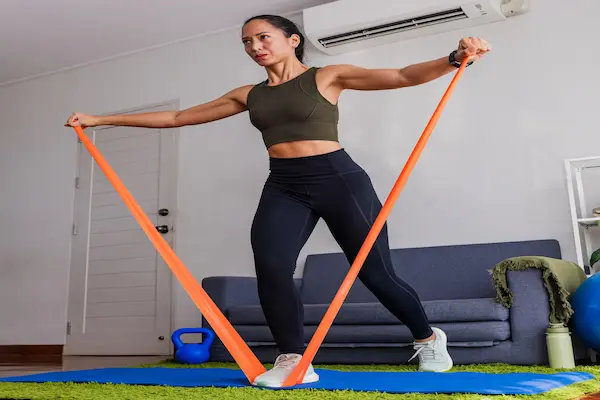
Exploring structured workout ways with resistance bands changes that situation, because once the basic principles are understood, these tools become joint friendly, adaptable and surprisingly powerful, offering enough resistance to challenge muscles, enough versatility to target every major area of the body and enough flexibility to fit into busy routines in short sessions that still feel purposeful.
Rather than guessing which direction to pull or wrapping bands around anything in reach, it helps to learn how different band types behave, how to anchor them safely, how to align joints for effective movement and how to build simple yet complete routines, so that each session feels like a clear step forward instead of an experiment that might or might not work.
The sections that follow explain the main kinds of resistance bands, outline essential safety checks before stretching them, offer exercise lists organized by muscle group, provide full-body routine examples for different levels and share maintenance and progression tips, all presented in an instructional, careful way that respects joint comfort and encourages steady, confident practice.
Understanding Your Resistance Bands Before You Train
A better experience with resistance bands begins with recognizing what you already own, since the shape, thickness and attachments all influence how to grip, anchor and adjust exercises, and knowing these details reduces confusion and unnecessary strain.
Types of Resistance Bands Commonly Used at Home
- Flat therapy bands
Long, flat strips of elastic material without handles, often supplied in rolls or cut sections, which work well for gentle shoulder, hip and core exercises because the grip can be adjusted easily and tension can be fine-tuned by changing how much of the band is taken up in the hands. - Loop mini-bands
Short continuous loops that slide around legs or arms, usually used for lower body work such as glute activation and hip control, and these bands are particularly useful for joint friendly toning of the hips and thighs without heavy weights. - Tubing bands with handles
Round rubber tubes with plastic or foam handles attached, sometimes including door anchors, which lend themselves to pulling and pressing motions similar to dumbbell or cable exercises, ideal for strength at home routines that resemble gym movements. - Long closed-loop bands
Large continuous loops, sometimes called power bands, that can assist bodyweight exercises or add resistance to squats and presses, and these require special attention to anchoring because of the higher tension they can generate.
Checking Band Resistance Levels
- Most sets come with color coding that indicates different resistance levels, so keeping an approximate record of which color feels light, medium or heavy for you can help avoid guesswork during workouts.
- Lighter bands suit small muscle groups, shoulder and rehab-style movements, while medium or heavy bands work better for larger muscles such as glutes, back and legs.
- Beginners often benefit from starting with lighter options and adding challenge by shortening band length or progressing to thicker bands only when technique feels stable.
Becoming familiar with band types and resistance levels makes it easier to select the right tool for each of the workout ways with resistance bands described later, and this awareness forms the base of safe, effective training.
Band Safety: Essential Checks Before Every Session
Safety deserves attention before the first repetition, because resistance bands store elastic energy, and if they snap or slip from an anchor point, they can cause stinging impacts, minor injuries or, in rare situations, more serious problems, especially near the face or eyes.
Pre-Workout Safety Checklist
- Inspect each band for cracks, thinning or small tears, especially near attachment points, knots or handles, and avoid using any band that shows visible damage.
- Ensure that the floor and surrounding area are clear of sharp objects, debris or furniture edges that might damage bands or create tripping hazards.
- Check anchor points such as door frames, heavy furniture or fixed bars, confirming that they can handle the pulling force and that door anchors are on the closing side of doors that are firmly shut and, ideally, locked.
- Wear comfortable clothing that does not snag or catch on the bands, and consider using closed-toe shoes with good traction when standing on bands to prevent slips.
- Begin with smaller ranges of motion and lighter tension when trying a new exercise for the first time, only expanding the range if the movement feels smooth and pain free.
Technique Principles to Protect Joints
- Keep joints softly bent and avoid locking elbows or knees at the end of the pull, which reduces strain and keeps tension in the target muscles.
- Maintain alignment through the spine by imagining a straight line from head to tailbone, especially during rows, presses and squats, and avoid excessive arching or rounding.
- Control the entire range of motion, both when pulling against the band and when returning to the starting position, since letting the band snap back quickly can stress joints and reduce muscle engagement.
- Match breathing with movement, generally exhaling during the effort phase and inhaling during the return, while avoiding breath-holding that could increase internal pressure.
- Stop immediately if sharp pain, sudden discomfort, dizziness or unusual symptoms appear, and consult a health professional when pain continues or recurs frequently.
Following these safety guidelines may seem basic, yet consistently applying them ensures that workout ways with resistance bands remain joint friendly and sustainable instead of risky or discouraging.
Upper Body Workout Ways with Resistance Bands
Resistance bands can effectively train the entire upper body, from the muscles of the back and shoulders that support posture to the chest, arms and forearms that help with pushing and daily tasks, and organizing exercises by muscle group helps create balanced routines.
Back and Posture-Focused Exercises
- Band row (seated or standing)
Sit or stand with the band anchored in front at mid-torso height, grip both ends or handles, keep elbows close to the body and pull toward your ribs while squeezing shoulder blades together; pause briefly, then return with control. - Band pull-apart
Hold a flat band at shoulder height with arms extended forward and elbows slightly bent, then pull the band apart by moving hands outward until shoulder blades pinch together gently; avoid shrugging shoulders toward the ears. - Single-arm row with door anchor
Attach a band at door handle height, stand facing the door, grasp the handle with one hand, step back for tension and row by pulling elbow toward your hip, rotating slightly if comfortable while keeping chest open.
Shoulders and Upper Back Exercises
- Lateral raises with band
Stand on the middle of the band with feet hip-width apart, hold ends in each hand, then lift arms out to the sides until hands reach just below shoulder height, keeping elbows slightly bent and avoiding swinging. - Front raises
Use a similar setup but lift arms forward to shoulder height, palms facing down or inward, controlling both the upward and downward phases. - Face pulls (for those with anchors)
Attach the band at eye level, hold with both hands, step back for tension, then pull toward your face while flaring elbows outward and gently rotating hands to face your temples, which emphasizes upper back and rear shoulder muscles.
Chest and Push-Based Exercises
- Standing chest press
Anchor a band behind you at chest height or wrap it around your back, hold ends in each hand near the chest, then press arms forward until elbows extend but do not lock, similar to a push-up motion, and return slowly. - Incline chest press (band under bench or chair)
For those with sturdy equipment, place the band under a bench or heavy chair, lie back, hold handles above the chest and press upward to straighten arms, keeping wrists neutral and shoulder blades slightly drawn together.
Arms: Biceps and Triceps
- Biceps curl
Stand on the band with feet shoulder-width apart, hold ends with palms facing forward, then bend elbows to bring hands toward shoulders while keeping elbows near your sides; return with slow control to maintain tension. - Hammer curl
Use the same stance but hold the band with palms turned inward toward each other, curling slowly and emphasizing forearm and upper arm together. - Triceps extension overhead
Anchor one end of the band under a foot or behind the back, hold the other end with one or both hands above the head, then extend elbows to straighten arms upward, being careful not to arch the lower back. - Triceps kickback
Step on the band, hinge slightly forward at the hips with a straight back, bend elbows so upper arms align with the torso, then extend forearms backward until arms straighten, feeling the tension at the back of the upper arm.
Integrating a mix of pulling and pushing moves ensures that upper body workouts stay well rounded, supporting both posture and everyday strength.
Lower Body Workout Ways with Resistance Bands
Resistance bands shine in lower body training, particularly for glutes, hips and thighs, because they allow joint friendly toning without heavy external load, and their portability makes them ideal for strength at home or while traveling.
Glute and Hip Activation Exercises
- Side steps with mini-band
Place a loop band around both legs above the knees or at the ankles depending on comfort, bend knees slightly and step sideways, keeping tension on the band at all times and avoiding knees collapsing inward. - Glute bridge with band
Lie on your back with knees bent and feet hip-width apart, wrap a mini-band above the knees, press knees gently outward against the band, then lift hips until a straight line forms from shoulders to knees, pause and lower quietly. - Standing hip abduction
Anchor a band around a sturdy object at ankle height, loop the other end around one ankle, stand tall while holding a chair or wall and move the banded leg outward to the side, emphasizing glute engagement rather than swinging from the lower back.
Quads and Hamstring Strengthening
- Band-resisted squats
Stand on a long loop or flat band with feet shoulder-width apart, hold ends at shoulder level or around the upper back, and squat down with hips moving backward, then stand up while pressing feet into the floor and controlling band tension. - Hamstring curl standing
Attach one end of the band to a low anchor, loop the other end around your ankle, stand facing the anchor, hold a support and bend the knee to bring heel toward your glute, focusing on smooth tension through the back of the thigh. - Seated leg extension with band
Loop a flat band around a sturdy table leg and the front of your ankle while seated, then extend the knee slowly to straighten the leg, pausing briefly at the top of the movement.
Calf and Ankle Work
- Seated calf press
Sit with legs extended, wrap a band around the ball of one foot and hold the ends, then press foot away as if pushing a gas pedal and slowly return to the starting position for controlled work at the ankle joint. - Standing calf raise with band assist
For extra challenge, stand on the band and hold ends in your hands while performing heel raises, giving additional resistance as you lift your body upward.
Combining glute, quad, hamstring and calf exercises creates comprehensive lower body workout ways with resistance bands that support walking, climbing stairs and daily activities.
Core and Stability Exercises with Resistance Bands
Strength at home routines should include some core and stability work, and resistance bands are particularly effective for training anti-rotation and postural control, which makes movements in daily life feel steadier and more coordinated.
Core Stability Exercises
- Pallof press
Attach a band to a door or anchor at chest height, stand sideways to the anchor, hold the band with both hands against your chest, then press arms straight out in front while resisting the band’s pull that tries to rotate your torso; maintain a tall posture and return slowly. - Standing band rotation (gentle)
Anchor the band at chest level, stand facing perpendicular to the anchor and hold the band with both hands, arms extended; rotate your torso slightly away from the anchor, using controlled motion and engaging abdominal muscles, then return to center. - Dead bug with band (for those comfortable on the floor)
Lie on your back, holding a band anchored overhead, keeping arms straight toward the ceiling, then slowly lower opposite arm and leg toward the floor while stabilizing the core, returning to start without letting the lower back arch excessively.
Postural Control Exercises
- Band-resisted bird dog (advanced beginners)
Position yourself on hands and knees, anchor a band to a heavy object ahead and loop it around one hand, then extend opposite arm and leg while resisting the band, focusing on keeping the spine stable. - Standing row with split stance
Perform a standard row while standing with one foot forward and one back, which adds a balance challenge and encourages core engagement.
Including these core patterns in your workout ways with resistance bands helps translate strength into better control throughout whole-body movements.
Building Simple Full-Body Routines with Resistance Bands
Once familiar with individual exercises, the next step involves linking them into full-body routines that cover major muscle groups without overwhelming your schedule, and these sample templates illustrate how to structure sessions at different difficulty levels.
Beginner Full-Body Routine (Approximately 20–25 Minutes)
- Warm-up (5 minutes)
Start with gentle marching, arm circles, shoulder rolls and a few light band pull-aparts using a very light band, focusing on smooth movements and breathing. - Upper body block
- Band row – 2 sets of 10–12 repetitions.
- Standing chest press – 2 sets of 10–12 repetitions.
- Lower body block
- Glute bridge with band – 2 sets of 10–12 repetitions.
- Band-resisted squats (shallow range) – 2 sets of 8–10 repetitions.
- Core and posture block
- Pallof press – 2 sets of 8–10 presses per side.
- Band pull-apart – 2 sets of 10–12 repetitions.
- Cool-down (3–5 minutes)
Finish with chest, shoulder, hip and hamstring stretches, and slow breathing in a comfortable standing or seated position.
Beginners can repeat this routine two to three times per week with at least one rest day between sessions, gradually increasing repetitions or band resistance as movements feel more secure.
Intermediate Full-Body Routine (Approximately 30–35 Minutes)
- Warm-up (5 minutes)
Perform light cardio such as marching or step touches, then add mobility work for hips and shoulders, plus one easy set of rows and squats using a light band. - Circuit Round 1
- Band row – 3 sets of 10–15 repetitions.
- Standing chest press – 3 sets of 10–15 repetitions.
- Biceps curl – 2–3 sets of 10–12 repetitions.
- Circuit Round 2
- Glute bridge with band – 3 sets of 12–15 repetitions.
- Side steps with mini-band – 2–3 laps in each direction, depending on space.
- Hamstring curl standing – 2 sets of 10–12 repetitions per leg.
- Core and stability
- Pallof press – 3 sets of 10–12 presses per side.
- Standing rotation with band – 2 sets of 8–10 controlled rotations per side.
- Cool-down (5 minutes)
Stretch major muscle groups and spend a few moments noticing how posture feels compared with the start of the session.
This intermediate template introduces more total work and slightly higher tension while still focusing on control and joint comfort, and it can form the backbone of regular strength at home programming.
Time-Saving Band Workout (Approximately 15 Minutes)
Some days only allow a brief session, and portable equipment such as resistance bands works particularly well for quick routines that still hit major areas.
- Warm-up (3 minutes)
Brisk marching, arm swings and a few gentle band pull-aparts with a light band. - Combined circuit
- Band row – 1–2 sets of 12 repetitions.
- Glute bridge with band – 1–2 sets of 12 repetitions.
- Standing chest press – 1–2 sets of 12 repetitions.
- Side steps with mini-band – short laps each way.
- Pallof press – 1–2 sets per side.
- Cool-down (3–4 minutes)
Stretches for chest, shoulders and legs, plus a few slow breaths.
Even a short routine like this, repeated consistently, can support toning and general strength, especially when combined with walking or other light activity through the week.
Progression and Programming Tips for Resistance Band Workouts
Building strength at home using resistance bands involves gradual change rather than sudden leaps, and thoughtful progression ensures that workout ways with resistance bands remain challenging and interesting without overwhelming muscles or joints.
Simple Ways to Increase Challenge Safely
- Increase repetitions within a moderate range before moving to a heavier band, for example from 10 to 15 reps while maintaining good form.
- Shorten the effective length of the band by stepping wider or wrapping ends around hands, which increases tension without needing a new band.
- Add an extra set for key exercises once current sets feel comfortable and controlled.
- Slow down movement speed, particularly on the return phase, to amplify muscle engagement without extra load.
- Introduce more advanced variations gradually, such as progressing from seated to standing versions or from bilateral to single-limb exercises, while monitoring joint response carefully.
Weekly Planning Ideas with Resistance Bands
- Schedule two to three full-body sessions per week using the routines above, leaving at least one rest or light-activity day between heavier sessions.
- On lighter days, use bands for mobility, postural work or short circuits rather than skipping movement entirely.
- Track exercises, sets and band colors in a small log so that improvements become visible; noticing progress helps maintain motivation.
- Alternate emphasis each session, such as focusing slightly more on upper body one day and lower body the next, to distribute fatigue.
Viewing band workouts within a weekly structure makes each session part of a larger plan rather than an isolated event, which encourages consistency and deliberate progression.
Maintaining and Storing Resistance Bands
Portable equipment such as resistance bands lasts longer and remains safer when cared for properly, and simple storage habits can extend band life while keeping your workout space tidy and ready for use.
Band Care Guidelines
- Keep bands away from sharp edges, rough surfaces and direct sunlight, because extreme heat and abrasion can weaken material over time.
- Wipe bands with a damp cloth after sessions, especially if they come into contact with sweat or dusty floors, and let them dry fully before storing.
- Avoid knotting bands tightly, as knots create stress points that are more likely to tear; use specially designed loops or wraps when possible.
- Inspect bands regularly for thinning, sticky spots or small cracks, and retire any band that appears worn, replacing it with a fresh one to prevent unexpected snapping.
Storage Suggestions for Home Use
- Hang bands on hooks or over a rounded bar rather than folding them sharply in drawers, which helps preserve elasticity.
- Group bands by color or resistance level so that choosing the right band becomes quick and intuitive at the start of each session.
- Keep frequently used bands near your preferred workout area to reduce setup time and remove excuses for skipping exercise.
Caring for bands in these simple ways supports both safety and convenience, making it easier to develop regular workout ways with resistance bands without interruptions from broken equipment.
Respecting Limits and Seeking Professional Advice When Needed
Although resistance bands offer joint friendly, adaptable strength at home, individual health conditions, previous injuries and current pain patterns may require specific professional input, and recognizing when to seek advice is part of responsible training.
Situations Where Extra Guidance Is Important
- History of recent surgeries, fractures, significant joint instability or diagnosed spinal issues.
- Presence of sharp or persistent pain during or after band exercises that does not improve with lighter tension and reduced range of motion.
- Medical conditions involving cardiovascular, neurological or metabolic systems that can influence exercise safety or tolerance.
- Uncertainty about correct technique even after careful reading and practice, especially for complex or high-tension movements.
Consulting healthcare or qualified exercise professionals in such situations allows for tailoring workout ways with resistance bands to specific needs and precautions, enhancing both safety and effectiveness.
Bringing Everything Together: Confident Strength at Home with Bands
Resistance bands, when understood and used thoughtfully, provide a compact, portable equipment solution for strength at home, enabling full-body workouts that can be gentle enough for beginners yet challenging enough for ongoing toning and progression, all while fitting into small spaces and busy schedules.
By learning how to check bands for safety, anchor them correctly, align joints, select exercises by muscle group, arrange those moves into balanced routines and adjust difficulty over time, any reader who owns bands but did not know how to start can build structured workout ways with resistance bands that feel clear, manageable and supportive of long-term practice.
As with any form of exercise, honoring your body’s signals, progressing gradually and seeking professional advice when pain or medical questions arise will help ensure that these resistance band routines remain a safe, effective and sustainable part of your overall fitness approach.