
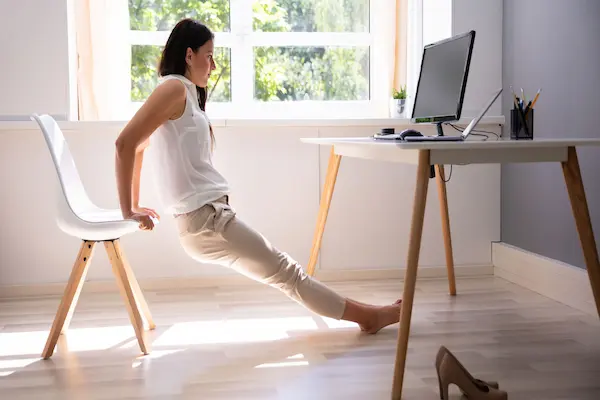
A realistic approach includes several elements: strengthening muscles that hold the shoulder blades and spine in healthier positions, stretching or mobilizing tissues that tend to shorten during long screen time, and adding tiny, desk-friendly movements that break up sitting without requiring a change of clothes or a trip to the gym, all while respecting individual limits and any advice from health professionals.
The sections that follow offer a measured, safety-aware, educational overview of workout ways to improve posture, including a basic core and back routine, clear descriptions of posture exercises, chest and hip stretches, and quick alignment tips you can use at your desk or at home to support better posture through consistent, manageable practice.
Understanding Posture and Why It Feels So Hard to Change
Many people think of posture as a frozen position that must be held perfectly all day, yet in reality the body prefers gentle movement and a variety of positions, and problems arise mainly when one rounded posture becomes the only option for many hours straight without breaks or supportive strength behind it.
Key Ideas About Posture and Alignment
- Neutral alignment describes a position where the head, ribcage, pelvis, knees and ankles stack in a fairly vertical line when viewed from the side, with natural curves in the spine but no extreme arching or slumping.
- Because the body adapts to what it repeatedly does, long periods of sitting with the head forward and shoulders rounded encourage some muscles to tighten (for example, chest and front of the neck) and others to weaken (such as upper back, rear shoulders and deep core).
- Posture exercises aim to restore balance by strengthening muscles that support alignment, while stretching or gently mobilizing areas that have become stiff from one-sided habits.
- Back strength and core control are both important, because muscles around the spine, ribs, hips and abdomen share the work of keeping you upright during daily activities.
When you view posture as a dynamic balance rather than a rigid pose, workout ways to improve posture make more sense, since they focus on gradually changing how your body feels and moves instead of demanding instant, long-lasting changes that are hard to maintain.
Safety and Preparation Before Doing Posture Exercises
Although the movements in this guide are selected with general safety in mind, everyone’s body is different, and pain history, injuries or medical conditions may influence which workout ways to improve posture are suitable at a given time, so preparing thoughtfully and paying close attention to your own response is essential.
Safety Questions to Consider
- Have you experienced recent injuries, surgeries, unexplained pain, numbness or tingling, especially in the neck, back, shoulders or legs, that have not been evaluated by a health professional.
- Do you currently feel sharp pain when you move your neck, raise your arms overhead, twist your spine or perform simple bending tasks.
- Has a doctor, physiotherapist or other professional given you specific restrictions regarding spine or shoulder movements.
- Are you able to get up and down from the floor comfortably, or do you need to modify exercises to a bed, sofa or chair height for now.
General Guidelines for Safe Practice
- Move slowly and avoid forcing any posture exercises into painful ranges; mild stretching and muscle effort can feel challenging but should not feel sharp, burning or alarming.
- Stay aware of your breath, exhaling during effort phases and inhaling during easier phases, avoiding breath-holding which can increase pressure within the trunk and head.
- Use support such as a wall, chair or folded towel under knees or head when needed to make positions more comfortable and stable.
- Stop any exercise immediately if pain increases or new symptoms appear, and seek appropriate medical advice if discomfort persists beyond expected mild muscle soreness.
Taking these precautions seriously protects you while you explore workout ways to improve posture, and it reinforces the important idea that effective posture work is about listening and adjusting, not pushing through warning signals.
Core Workout Foundations for Better Posture
Because the core supports the spine from all sides, developing gentle but consistent core strength helps stabilize your midsection so that the shoulders and neck do not have to compensate as much, and focusing on deep, steady activation rather than aggressive crunches often works better for posture-related goals.
Core Activation Drill: Supine Abdominal Bracing
This movement helps you feel the deep abdominal muscles engaging without straining your neck or pulling you into extreme flexion.
- Lie on your back on a comfortable surface, bend knees and place feet flat about hip-width apart, then rest arms by your sides with palms facing up.
- Imagine a line between your hip bones and gently draw the lower abdomen inward as if zipping up snug pants, while keeping your ribs resting naturally on the floor.
- Breathe normally while holding this light contraction for 5–10 seconds, ensuring that your neck, shoulders and jaw remain relaxed rather than scrunched.
- Release completely and repeat 5–8 times, focusing on controlled engagement and release rather than maximum effort.
Beginner Core Exercises That Support Posture
- Dead bug variation (joint friendly version)
Lie on your back with knees bent and feet lifted so that hips and knees form roughly 90-degree angles, then place hands on thighs; gently press thighs and hands into each other while tightening your deep core for several breaths, release and repeat for 6–8 cycles, keeping the lower back stable. - Bridge hold (for glutes and lower back support)
From the same starting position on your back, press feet into the floor, squeeze glutes and lift hips until your body forms a gentle diagonal from shoulders to knees, hold for 5–10 seconds while breathing steadily, then lower down; complete 8–10 repetitions at a controlled pace. - Side-lying leg lift (for lateral hip and core)
Lie on one side with legs extended and stacked, support your head with your lower arm or a pillow, then tighten your side waist lightly and raise the top leg 15–20 centimeters without tipping your torso forward or backward; lower with control and repeat 10–12 times per side.
Performing these basic core workout movements two or three times per week builds a foundation that makes later posture exercises more effective, because your midsection can better support the alignment changes you wish to create.
Back Strength Exercises to Counter the Hunched Position
Many people with screen-related posture complaints experience weak upper back muscles and overworked front-of-shoulder structures, which leads to rounded shoulders and a feeling of collapse through the chest, so targeted back strength training becomes central among workout ways to improve posture.
Scapular Retraction and Shoulder Blade Control
Shoulder blades anchor many posture exercises, and learning to move them gently into better positions helps every subsequent movement.
- Sit or stand tall with arms relaxed at your sides and palms facing slightly forward.
- Imagine sliding both shoulder blades toward each other and slightly down toward your back pockets, without lifting or shrugging them upward.
- Hold this retracted position for 5 seconds, noticing mild muscular effort between the shoulder blades, then relax fully.
- Repeat 8–10 times, ensuring that your neck does not strain forward and your lower back does not arch excessively.
Upper Back and Rear-Shoulder Strength Moves
- Prone W or T (floor or bed variation)
Lie on your stomach or a firm bed with arms out to the sides in a “W” shape, elbows bent about 90 degrees; gently lift your head, chest and hands a few centimeters off the surface while squeezing shoulder blades together, then lower; complete 8–10 repetitions and stop if your lower back feels compressed rather than engaged. - Bent-over row with light weights or household items
Stand with feet hip-width apart, hinge slightly forward from the hips while keeping the spine long, hold light dumbbells or water bottles with arms hanging toward the floor, then pull elbows back toward your ribcage, pause, and lower slowly; perform 10–12 repetitions focusing on back muscles rather than arms alone. - Wall slide (for shoulder mobility and back strength)
Stand with your back gently against a wall, feet slightly forward, press the back of your head and upper back into the wall without pain, raise arms to form a “goalpost” position with elbows and wrists touching the wall if possible, then slide arms upward and downward while maintaining contact; perform 8–10 slow repetitions.
Integrating these back strength patterns into your weekly routine encourages the upper body to open and align more easily, since stronger rear shoulders and mid-back muscles can better counteract the constant pull of rounded sitting postures.
Stretching and Mobility for Tight Chest, Hips and Neck
Strength work alone does not fully address screen-related posture; areas that have shortened over time need gentle stretching or mobility work so that new alignment becomes physically possible rather than forced and uncomfortable.
Chest and Front-of-Shoulder Stretches
- Doorway chest stretch
Stand in a doorway, place forearms on the frame with elbows roughly at shoulder height, then gently lean your body forward until a mild stretch appears across the chest and front shoulders; hold for 20–30 seconds while breathing calmly and avoid forcing the range. - Seated chest opener
Sit near the front of a chair, interlace fingers behind your lower back if shoulders allow, straighten arms gently and lift your chest upward, feeling the front of the body expand; hold for 10–20 seconds, relax and repeat a few times.
Hip Flexor and Front-of-Hip Stretches
- Kneeling hip flexor stretch (with cushion)
Place a folded towel under one knee on the floor, step the opposite foot forward so that knee is bent, then gently shift hips forward while keeping the torso upright; you should feel a stretch in the front of the hip on the kneeling side; hold 20–30 seconds and repeat on the other side. - Standing lunge stretch (desk-friendly variation)
Stand next to a desk or chair for support, step one foot back and bend the front knee slightly, then tuck your tailbone gently and shift weight forward until you feel a stretch in the front of the back hip; hold for 20–30 seconds on each side.
Neck and Upper Spine Mobilization
- Chin tuck (for alignment, not aggressive stretch)
Sit or stand upright, imagine sliding your head straight back as if creating a double chin, without tipping the head up or down; hold for 3–5 seconds and release, repeating 8–10 times to encourage a more neutral head position over the shoulders. - Gentle neck side stretch
Keeping shoulders relaxed, tilt your head smoothly toward one shoulder until you feel a mild stretch along the opposite side of the neck; hold 15–20 seconds, breathe slowly, and repeat on the other side, avoiding pulling hard with the hand or forcing extra range.
Performing these stretching and mobility exercises regularly, especially after long screen sessions or at the end of the day, helps reduce pulling forces that maintain rounded posture and makes the strengthening work more effective.
Desk-Friendly Movements to Break Up Sitting
Because much of the hunched feeling comes from uninterrupted sitting, quick, subtle movements performed at your desk can complement more formal workout ways to improve posture by reminding your body to reposition and reset throughout the day.
Micro-Break Movements You Can Do at Your Desk
- Seated spinal extension
Sit closer to the front of the chair, place hands on the sides of the seat or on your thighs, and gently lift your chest upward while lengthening the spine, as if becoming taller; hold for a few breaths, then relax back to a neutral sitting position. - Seated scapular squeezes
While keeping arms by your sides, roll shoulders back slightly and squeeze shoulder blades toward each other, hold five seconds and release; repeat 10–12 times with relaxed breathing. - Thoracic rotation
Cross arms lightly over your chest, sit tall, and slowly rotate your upper body to one side within a comfortable range, hold briefly, return to center and rotate to the other side; perform 6–8 slow repetitions per side. - Desk chest opener
Place hands on the back of your chair or on the desk behind your body, slide your chair slightly forward if possible, and gently expand your chest while drawing shoulders down and back, pausing for several breaths.
Standing Breaks for Better Alignment
- Every 30–60 minutes, stand up, let arms hang freely, roll shoulders, perform a few gentle neck tucks and take at least 20–30 steps around the room or hallway if your environment allows it.
- During phone calls, consider standing or walking instead of remaining seated, using that time as a posture and mobility check-in.
These small desk-friendly movements do not replace full workouts, yet they significantly reduce the continuous load of static sitting and support your overall efforts to improve posture.
Putting It Together: Basic Core and Back Routine for Posture
A structured routine that you can perform several times per week makes it easier to use workout ways to improve posture consistently, so the following example outlines a simple 15–20 minute session you can adapt to your comfort level.
Example Posture Support Routine (15–20 Minutes)
- Warm-up (3–4 minutes)
- March in place or walk gently around the room for 1–2 minutes to increase blood flow.
- Perform a series of 8–10 shoulder rolls forward and backward.
- Complete 8–10 gentle chin tucks and a few upper spine rotations in standing or sitting.
- Core block (5–6 minutes)
- Supine abdominal bracing – 5–8 repetitions of 5–10 second holds.
- Bridge hold – 8–10 repetitions, pausing briefly at the top of each lift.
- Side-lying leg lift – 10–12 repetitions per side.
- Back and shoulder block (5–6 minutes)
- Scapular retraction – 8–10 repetitions of 5-second holds.
- Prone W or T – 8–10 repetitions with controlled lifting and lowering.
- Bent-over row with light load – 10–12 repetitions, focusing on shoulder blade movement.
- Stretch and mobility block (3–4 minutes)
- Doorway chest stretch – 20–30 seconds per position.
- Kneeling or standing hip flexor stretch – 20–30 seconds per side.
- Gentle neck side stretch and chin tucks – brief sets with relaxed breathing.
Practicing this routine two or three times each week, combined with desk-friendly movements on workdays, provides a reasonable starting point for improving posture through strength and mobility that respect your current capacity.
Alignment Tips for Everyday Standing and Sitting
Exercises build capacity, while alignment tips help you use that capacity in normal life, so combining posture exercises with simple cues for standing and sitting positions can gradually change how your body feels during long days.
Standing Alignment Checklist
- Place feet roughly hip-width apart with weight balanced between heel and forefoot rather than collapsing into the toes or leaning back on the heels.
- Soften knees slightly instead of locking them straight, which eases strain on joints and encourages subtle muscular engagement.
- Imagine lengthening upward through the crown of your head while keeping ribs stacked over the pelvis rather than thrusting the chest forward.
- Let shoulders relax downward, then gently draw shoulder blades back and slightly together without over-arching the lower back.
- Align ears over shoulders by using gentle chin tucks instead of simply tilting the head backward.
Sitting Alignment Checklist
- Sit so that your hips are as far back in the chair as is comfortable, using a small cushion or rolled towel at the lower back if needed to maintain natural curves.
- Adjust chair height so that knees are approximately level with or slightly lower than hips, and feet can rest flat on the floor or a stable support.
- Keep screen height such that your eyes are roughly level with the top part of the display, which reduces neck bending and forward head posture.
- Relax shoulders and keep forearms roughly parallel to the floor when typing, modifying desk or chair height if necessary.
- Use short alignment resets—such as the seated spinal extension and scapular squeezes—several times each hour rather than expecting to sit perfectly all day.
Implementing these alignment tips alongside workout ways to improve posture reinforces your efforts, because the body begins to spend more time in positions that match the strength and mobility changes created during exercise.
Progression, Patience and When to Seek Professional Help
Shifting long-standing posture habits takes time, and expecting instant results usually leads to frustration, so viewing these posture exercises and routines as part of a gradual training process can help you stay consistent without feeling discouraged.
Progression Ideas for Posture-Oriented Workouts
- Increase repetitions slowly for core and back exercises once you can perform the current number with smooth control and no pain during or after the session.
- Add an extra set to selected movements or extend hold times by a few seconds as your muscles adapt, while still allowing rest days for recovery.
- Introduce slightly more challenging variations, such as moving from kneeling hip flexor stretches to deeper lunges or from basic bridges to single-leg bridging, only if your body tolerates earlier versions well.
- Combine the full 15–20 minute routine with additional shorter desk-friendly breaks on more days of the week as you build tolerance.
Situations Where Professional Guidance Is Recommended
- Persistent or worsening pain in the neck, back, shoulders or hips that does not improve with gentle adjustments or rest.
- Symptoms such as numbness, tingling, weakness or radiating pain down arms or legs, which can signal nerve involvement.
- History of spinal surgery, significant injury, diagnosed spinal conditions or other medical issues for which specific exercise guidance has not yet been provided.
- Uncertainty about whether your technique is correct despite careful reading and effort, especially if exercises feel awkward or consistently uncomfortable.
Consulting a doctor, physiotherapist or other qualified movement professional in these circumstances allows you to tailor workout ways to improve posture to your specific needs and ensures that any underlying issues are addressed appropriately, rather than masked by generic routines.
Bringing It All Together: A Practical Path Toward Better Posture
Posture changes do not happen overnight, yet consistent, thoughtful work that combines core workout patterns, back strength training, stretching of tight areas, alignment tips and desk-friendly micro-movements can gradually reduce the feeling of being hunched and make daily positions more comfortable and sustainable.
By choosing a realistic routine length, applying clear safety guidelines, listening carefully to your body and integrating small breaks during screen time, you can use the workout ways to improve posture outlined in this article as a starting point for long-term support of your spine and overall alignment, always remembering that individual circumstances may require personalized adjustments from a health professional.