
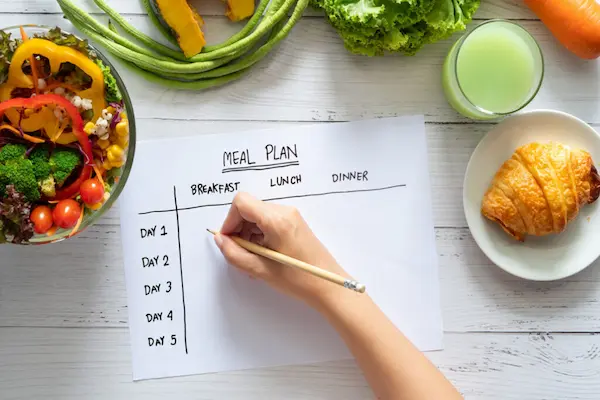
Learning how to plan healthy meals in a structured but flexible way turns that nightly guessing game into a smoother routine, because instead of opening the fridge and starting from zero, you follow a weekly menu that you designed ahead of time, one that respects your schedule, your family’s tastes and your energy level on busy days.
Planning does not need to be complicated or rigid, and it definitely does not need to produce perfect picture-ready plates every night, since the real goal of meal planning is to reduce stress, make family meals more balanced most of the time, and build a cooking rhythm that you can actually keep going week after week.
This guide walks through a clear, didactic framework for how to plan healthy meals, provides printable-style templates in text form for your weekly menu and shopping list, shares example menus you can copy or adapt, and offers practical tips for building a grocery shopping list that supports your plan instead of working against it.
Before You Start: Principles Behind a Healthy Weekly Menu
Planning becomes much easier when you know what you are aiming for, so it helps to begin with a few simple principles that describe what “healthy” means in the context of home meal planning, without getting lost in overly detailed nutrition rules.
Key Principles for Healthy Family Meals
- Most meals include a source of protein, a generous portion of vegetables or fruits, and some form of whole or minimally processed carbohydrate such as grains or starchy vegetables.
- Weekly variety matters more than daily perfection, so you can aim for different colors, textures and types of foods across the week rather than stressing about each single plate.
- Portions and ingredients are adjusted to your household: a solo cook will plan differently than a family with small children, yet the core ideas of a balanced plate remain similar.
- Time and energy are real constraints, which means your weekly menu should contain quick dishes for busy nights and slightly more involved recipes only where they truly fit.
- The best meal planning system is one you can follow consistently, so it is wiser to start simple and expand gradually than to design an elaborate plan that collapses after a week.
Step 1: Map Your Week Before You Plan the Food
The first step in how to plan healthy meals is not about recipes or ingredients; rather, it is about understanding your real week, because a weekly menu that ignores work hours, activities and social events will be very hard to follow in practice.
Look at Your Weekly Calendar
- Take a blank piece of paper or open a digital note and write the days of the week across the top, leaving space under each day.
- For each day, note down key time blocks, such as late meetings, children’s activities, gym sessions, or social plans that might affect when and how you cook.
- Mark which evenings are “busy nights” where you need very quick dishes, which nights are moderate, and which one or two nights are calmer and can handle slightly longer cooking.
- Identify any days when you might eat out or rely on leftovers, so you do not over-plan and buy more food than you can use.
Questions That Clarify Your Constraints
- On how many evenings can you realistically cook from scratch for more than twenty or thirty minutes.
- Are there lunches that need to be packed for work, school or family members, and can those lunches be built from dinner leftovers.
- Are there dietary patterns, allergies or preferences in your household that must be considered for family meals.
- How many people do you usually feed at each meal, and does this change on certain days.
Once you see your week clearly on paper, you can design your meal planning framework so that each dinner and, if needed, some lunches fit the level of complexity the day can handle, which immediately reduces decision fatigue.
Step 2: Choose a Simple Meal Planning Framework
After mapping your week, the next part of how to plan healthy meals involves choosing a basic framework or pattern that will guide your menu, so you are not starting from a blank page every single time you sit down to plan.
Theme-Based Weekly Menu Ideas
A theme-based weekly menu uses rough categories for each night, which helps you narrow choices quickly while still allowing variety inside each theme.
- Monday – Pasta or grain-based bowl night (for example, whole wheat pasta, quinoa, or rice bowls).
- Tuesday – Legume or vegetarian night (soups, stews, bean tacos, lentil curries).
- Wednesday – Quick skillet or stir-fry night (mixed vegetables plus protein over rice or noodles).
- Thursday – Oven or sheet-pan night (baked chicken or tofu with roasted vegetables and potatoes).
- Friday – Family meals that feel fun, such as homemade pizza, tacos, or wraps with plenty of vegetables.
- Weekend – Flexible mix of leftovers, new recipes, or eating out, depending on plans and energy.
Balanced Plate Formula for Each Meal
Whether you use themes or not, a “balanced plate” formula can guide each individual meal, making decisions easier every time you plan a dinner or lunch.
- Start with a vegetable (or a mix of vegetables) that can take up a good portion of the plate or bowl.
- Add a protein source, such as beans, lentils, eggs, fish, tofu, poultry or lean meat.
- Include a whole grain or starchy vegetable like brown rice, quinoa, potatoes, pasta or whole grain bread.
- Optionally add healthy fats and flavors from ingredients like olive oil, avocado, nuts, seeds and herbs.
When you combine a weekly menu framework with a basic balanced plate formula, you get a structure that respects variety and health while still being simple enough to use repeatedly.
Step 3: List Your Go-To Meals and Simple Building Blocks
The third step in how to plan healthy meals is to create a short list of “go-to” dishes and building blocks, because meal planning becomes much less stressful when you can plug in familiar options rather than hunting for new recipes every week.
Create a Core List of Favorite Meals
- Write down three to five dinners that you already cook regularly and that feel relatively balanced, even if they are very simple.
- Add two or three meals that you would like to include more often, such as a bean soup, a vegetable stir-fry or a fish dish, as long as they feel realistic for your schedule.
- Note any lunches that can be built from leftovers of these dinners, such as reheated stir-fry, rice bowls or extra soup in containers.
Identify Building Blocks You Can Prep or Reuse
- Cooked grains like rice, quinoa or barley that can serve as the base for different bowls or stir-fries.
- Prepped vegetables, such as washed salad greens, chopped carrots or frozen mixed vegetables, which shorten cooking time.
- Batch-cooked proteins, such as baked chicken breast, seasoned tofu, or a pot of beans that can be used in several meals.
- Simple sauces or dressings you enjoy, like a basic tomato sauce, yogurt-based sauce, or oil and vinegar dressing.
Your planning framework becomes far easier to use once you have this personal library of meals and components, because each weekly menu simply combines known family meals with a few new ideas when you feel like experimenting.
Step 4: Use a Printable-Style Weekly Menu Template
With your calendar, framework and favorite meals in place, you are ready to fill a weekly menu, which means putting each dinner (and possibly lunches or breakfasts) into a simple template so you can see the whole week at a glance.
Example Weekly Menu Template (Text Format)
  WEEKLY MENU

  MONDAY
  - Breakfast:
  - Lunch:
  - Dinner:
  - Snacks:

  TUESDAY
  - Breakfast:
  - Lunch:
  - Dinner:
  - Snacks:

  WEDNESDAY
  - Breakfast:
  - Lunch:
  - Dinner:
  - Snacks:

  THURSDAY
  - Breakfast:
  - Lunch:
  - Dinner:
  - Snacks:

  FRIDAY
  - Breakfast:
  - Lunch:
  - Dinner:
  - Snacks:

  SATURDAY
  - Breakfast:
  - Lunch:
  - Dinner:
  - Snacks:

  SUNDAY
  - Breakfast:
  - Lunch:
  - Dinner:
  - Snacks:
You can print or copy this outline into a notebook, and if it feels overwhelming to fill every line at first, it is completely reasonable to start by planning only dinners and one or two lunches, gradually adding breakfasts and snacks as the system becomes more comfortable.
Tips for Filling the Weekly Menu
- Begin with the nights you know will be busiest and assign your quickest family meals or leftovers to those slots.
- Place more involved recipes or new dishes on evenings with fewer time pressures or when you enjoy spending longer in the kitchen.
- Use the same breakfast or lunch for several days in a row if that reduces decision fatigue, as long as the meal feels balanced and suits your tastes.
- Consider repeating one dinner later in the week (such as a soup or curry) to save time and money, especially if you enjoy leftovers.
- Leave at least one “flex night” for unexpected plans, using simple pantry-based meals or prepared items if needed.
Step 5: Turn Your Weekly Menu Into a Shopping List
Once the weekly menu is on paper, the next part of how to plan healthy meals is transforming that menu into a practical shopping list, grouped in a way that makes grocery trips easier and keeps you focused on what you actually need.
Gather the Ingredients From the Menu
- Look at each planned meal and write down every ingredient that you will need for it, including oils, spices and staples like grains or canned items.
- Check what you already have in your pantry, fridge and freezer; cross off ingredients that are already stocked or adjust quantities if you only need a little more.
- Note any staple or household items that are nearly empty and should be added to the shopping list, such as cooking oil, basic seasonings or breakfast items.
Organize the Shopping List by Store Section
Grouping the items based on where they are found in the store helps you avoid walking back and forth and reduces impulse purchases.
  SHOPPING LIST BY SECTION

  PRODUCE
  -
  -

  GRAINS / BREAD
  -
  -

  PROTEIN (MEAT, FISH, TOFU, EGGS, BEANS)
  -
  -

  DAIRY / REFRIGERATED
  -
  -

  CANNED / JARRED
  -
  -

  FROZEN
  -
  -

  SPICES / OIL / OTHER
  -
  -
- Write each ingredient in only one section, which makes the list easier to follow while shopping.
- Use small marks or colors to separate “must buy” items from “nice to have” extras in case you need to adjust for budget.
- Keep the list visible and accessible during the week so you can add items as you run out of things between planning sessions.
Example Weekly Menus You Can Adapt
Sometimes the easiest way to learn how to plan healthy meals is to see concrete examples, so the following sample weekly menus show how the planning framework can look in real life; you can copy them as starting points or modify them to match your household.
Example Weekly Menu for a Busy Household (Dinner Focused)
- Monday
– Dinner: Whole wheat pasta with tomato and lentil sauce, side salad with mixed greens and carrots, fruit for dessert. - Tuesday
– Dinner: Stir-fry with frozen mixed vegetables and tofu over brown rice, topped with sesame seeds. - Wednesday
– Dinner: Sheet-pan chicken with potatoes and broccoli, seasoned with herbs and olive oil. - Thursday
– Dinner: Bean and vegetable chili served with whole grain bread and sliced avocado. - Friday
– Dinner: Homemade tacos with ground turkey or beans, lettuce, tomato, cheese and corn, plus a side of fruit salad. - Saturday
– Dinner: Simple vegetable soup with barley, served with grilled cheese sandwiches or hummus wraps. - Sunday
– Dinner: Baked fish with lemon, quinoa, and roasted vegetables like carrots, peppers and zucchini.
Example Weekly Menu With Leftover-Based Lunches
- Monday lunch: Leftover pasta and salad from Sunday’s dinner.
- Tuesday lunch: Stir-fry leftovers in a tortilla or wrap with extra salad greens.
- Wednesday lunch: Chicken and roasted vegetable bowl over extra rice or grains.
- Thursday lunch: Bean chili over baked potatoes or with a side of steamed vegetables.
- Friday lunch: Taco bowl built from leftover fillings, with added beans or grains as needed.
These examples illustrate how a weekly menu and meal planning routine can reduce cooking time while still delivering family meals that align with your goal of healthier eating.
Printable-Style Templates for Meal Planning and Reflection
Templates provide structure without requiring special tools, and you can copy the formats below into a notebook, a digital planner or a simple document to support your meal planning habit.
Daily Meal Planning Template
  DAILY PLAN

  DAY:
  - Breakfast:
    - Protein:
    - Grain / Starch:
    - Fruit / Vegetable:
  - Lunch:
    - Protein:
    - Grain / Starch:
    - Vegetables:
  - Dinner:
    - Protein:
    - Grain / Starch:
    - Vegetables:
  - Snacks:
    - Option 1:
    - Option 2:
Weekly Reflection Template for Meal Planning
  WEEKLY MEAL PLANNING REFLECTION

  1. Which meals worked especially well this week (easy to make, everyone enjoyed, felt balanced)?
  2. Which meals felt too complicated or time-consuming for the day they were on?
  3. Did any ingredients go to waste, and if so, how could the plan change next week to use them up?
  4. Which quick meals or backup options were most helpful when plans changed?
  5. What one adjustment will I make to next week's weekly menu or shopping list?
Using these templates helps you gradually refine how to plan healthy meals so that your system reflects your real needs rather than a generic ideal.
Shopping List Tips That Reduce Stress and Impulse Buys
A thoughtful shopping list not only ensures you have what your weekly menu requires but also cuts down on last-minute decisions in the store, which can otherwise lead to impulse purchases and forgotten staples.
Strategies for a More Effective Shopping List
- Write your list soon after finalizing the weekly menu, while the details of family meals are still fresh in your mind.
- Keep a running list in the kitchen where anyone can note items that are nearly finished, such as spices, grains or freezer staples.
- Group items by store section or aisle, as described earlier, to make your trip faster and more focused.
- Use a “first check pantry, then shop” rule: before you leave the house, quickly scan your shelves and freezer to avoid buying duplicates.
- Include a small number of flexible items, like extra frozen vegetables or canned beans, which can turn leftover bits into complete meals.
Balancing Budget and Variety in Your Weekly Menu
- Plan some meals around lower-cost ingredients such as beans, lentils, seasonal vegetables and whole grains to balance out more expensive items like certain meats or specialty products.
- Repeat one or two family meals during the week to save money and reduce ingredient variety, particularly when life is very busy.
- Use your planning framework to highlight which nights can support more economical batch cooking, allowing leftovers to supply multiple lunches or dinners.
When your shopping list follows from a realistic weekly menu and is grounded in your budget, you reduce both stress and waste while still keeping family meals interesting.
Building a Routine Around Meal Planning
Like any habit, the process of how to plan healthy meals becomes easier when it is attached to a regular time and a simple routine, rather than being squeezed in at random moments when you are already exhausted.
Creating a Weekly Meal Planning Ritual
- Pick a consistent planning day and time, such as Saturday morning or Sunday afternoon, and reserve twenty to thirty minutes for reviewing the upcoming week and filling your menu template.
- Keep your calendar, recipe ideas, favorite meal list and pantry view available during this time, so you do not need to hunt for information.
- Decide each week whether you will reuse parts of last week’s menu, because repeating successful meals can be very efficient.
- Finish the session by finalizing the shopping list and choosing when you will shop, even if that is an online order or a quick stop after work.
Involving Family Members in Meal Planning
- Ask family members to suggest one meal each week, within your balanced framework, to increase buy-in and reduce complaints at the table.
- Use a simple rotation where each person chooses the Friday or weekend meal, while you keep control over the rest of the weekly menu.
- Encourage children or partners to help check pantry items and write the shopping list, turning the task into a shared responsibility.
Over time, this routine reduces mental load and distributes the work, which tackles the original problem of decision fatigue while still supporting healthy eating goals.
Backup Plans for When the Week Does Not Go as Planned
Even the best weekly menu cannot predict every last-minute meeting, illness or invitation, so part of learning how to plan healthy meals is accepting that some days will require improvisation and that having backup options makes improvisation easier.
Backup Meal Ideas to Keep in Mind
- Pantry pasta: whole wheat pasta with canned tomatoes, garlic, olive oil and frozen vegetables.
- Bean bowls: canned beans warmed with spices, served over leftover grains or toast with any available vegetables.
- Egg night: scrambled or fried eggs with toast and a side of raw or steamed vegetables and fruit.
- Soup shortcut: quick soup made from broth, canned beans and frozen vegetables, served with bread or crackers.
Freezer Helpers for Emergency Meals
- Frozen mixed vegetables that can be added to almost any dish for instant color and fiber.
- Portions of cooked grains or beans, labeled with dates, ready to form the base of a quick bowl or stir-fry.
- Batch-cooked stews or curries frozen in single or double servings for days when cooking is not realistic.
When these backup ideas are part of your planning framework, a disrupted schedule becomes an opportunity to use your emergency options rather than a reason to abandon healthy habits entirely.
Bringing Everything Together into a Sustainable Planning System
Putting all of these elements together, how to plan healthy meals becomes a repeatable system rather than a guessing game, because each week you follow the same broad steps: you review your calendar, choose a weekly menu framework, plug in favorite meals and simple building blocks, fill a printable-style template, and translate that into a focused shopping list.
The system can start very small, perhaps with planning only three dinners per week and one leftover-based lunch, and then expand as you gain confidence and see which parts save you the most time and stress, which ensures that meal planning feels like a support rather than another heavy chore on your list.
Over time, you will likely find that family meals become more consistent, grocery shopping feels more intentional, and your kitchen holds the ingredients needed for the weekly menu you designed, all of which work together to reduce decision fatigue and make healthier choices easier to follow.
The ideas in this article are practical tools for organizing meals, not medical or individualized dietary advice, and if you have specific health conditions, allergies or nutrition questions, it is always wise to discuss your weekly menu and shopping list with a qualified professional who can help you fine-tune this meal planning framework to suit your unique situation while you continue practicing how to plan healthy meals in a structured, solution-focused way.