
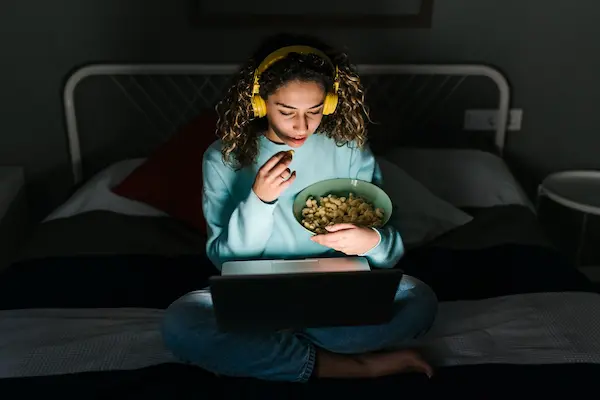
Healthy eating habits at night do not need to mean strict rules, early cut off times, or guilt about every late dinner, because for many schedules, cultural routines, and family patterns, eating later is simply part of normal life, and the real opportunity lies in making those late meals and evening snacks more thoughtful, balanced, and connected to how your body actually feels.
Instead of focusing only on what to avoid, it can be more helpful to look at gentle ways to reshape late dinner habits, choose lighter evening snacks when you still feel hungry, and notice which moments are driven by real physical hunger and which ones are more about tiredness, emotion, or simple habit that formed over years.
This guide explores healthy eating habits at night in a calm, non-judgmental way, offering examples of light meals, realistic routine ideas for different schedules, and reflection prompts that help you understand your own hunger and evening patterns, so you can make better choices without feeling policed by your plate.
Why Evenings Can Be the Hardest Time to Eat Calmly

When the sun goes down, work emails slow, and the day finally loosens its grip, many people suddenly feel the combination of mental fatigue, emotional stress, and physical hunger that has been building quietly for hours, which makes it very easy to reach for heavy late dinners, multiple evening snacks, or repeated visits to the kitchen without much thought.
Common Reasons Night Eating Feels Out of Control
- Busy days with rushed or skipped meals that leave you genuinely hungry at night, making large servings and quick comfort foods much harder to resist.
- Using food as a way to relax, unwind, or reward yourself after a long day when you finally have time and privacy to slow down.
- Eating in front of screens, such as television, laptops, or phones, which can disconnect you from fullness signals and lead to automatic snacking.
- Social and family patterns where late dinner is the main shared meal, often with rich foods and extended eating windows.
- Irregular schedules or shift work that naturally push your main meals into the evening, even when most advice assumes a traditional daytime routine.
Recognizing any of these factors in your own life does not mean something is wrong with you; it simply shows that your environment and routines are nudging you toward eating more at night, and that small adjustments may make a big difference over time.
Gentle Principles for Healthy Eating Habits at Night
Before looking at specific meal ideas, you can give yourself a supportive framework by adopting a few principles that respect your real schedule, your culture, and your preferences, while still guiding you toward more balanced late dinners and evening snacks.
Principles to Support Better Choices After Dark
- Aim to arrive at the evening not completely starved by giving your body some fuel during the day, which often makes late dinner decisions more reasonable and less urgent.
- See night eating as part of your whole day rather than judging it in isolation, asking how breakfast, lunch, and snacks set the stage for your evening appetite.
- Use lighter evening meals and evening snacks as tools to feel comfortable, not as punishment or rigid restriction, which helps you avoid rebound overeating later.
- Practice pausing briefly before and during eating at night, checking how hungry you are and whether the next bite is still enjoying or already pushing into discomfort.
- Keep permission to eat when you are truly hungry, even if the clock feels “late,” focusing instead on what and how much will feel best when you wake up the next day.
Anchoring your choices in these kinds of principles allows you to adjust late dinner habits without leaning on extreme rules that ignore your reality.
Understanding Your Nighttime Hunger: Reflection Before Change
Before changing what you eat at night, it helps to understand why you are eating and which patterns appear most often, because healthy eating habits at night begin with awareness rather than with sudden restriction.
Reflection Prompts About Evening Hunger
- At what times do you most often find yourself eating at night, and how many hours have usually passed since your last meal or snack.
- How does your hunger feel when you start eating in the evening; does it feel like a deep physical hunger, a mild emptiness, or more like stress, boredom, or habit.
- What are you usually doing while you eat at night, such as watching shows, scrolling on your phone, working, or sitting at a table without screens.
- Which foods do you naturally choose when you feel tired or emotional at night, and how do those foods make you feel immediately and the next morning.
- Are there specific days of the week where your night eating feels heavier or more automatic, such as after certain work tasks, social situations, or personal stressors.
Simple Journaling or Notes Exercise
- For three to seven nights, write down roughly what time you eat, what you eat, and what you were feeling or doing just before you started.
- Note whether the eating happened because you felt clearly hungry, because food was just there, or because of emotion, stress, or routine.
- Record how your body feels 20 to 30 minutes after eating, focusing on comfort, energy, and mood rather than judgment about “good” or “bad” choices.
- Review the notes at the end of the week and highlight patterns, such as repeated late dinners without lunch, or particular evenings when you always snack more.
Gentle observation like this often reveals where one or two targeted changes could improve your evenings without overhauling your entire diet.
Building a Lighter Late Dinner: Patterns That Satisfy Without Overloading
Healthy eating habits at night do not mean avoiding late dinner altogether, especially when work shifts or family routines make evening the most realistic time for your main meal, yet you can shape that meal so it feels lighter, more balanced, and kinder to your digestion and sleep.
General Pattern for Lighter Evening Meals
- Fill at least half of your plate or bowl with vegetables or a mix of vegetables and light soups, which can be fresh, frozen, steamed, roasted, or tossed into simple salads.
- Include a modest portion of protein such as beans, lentils, tofu, fish, eggs, or lean meats, which helps with fullness without necessarily making the meal heavy.
- Add a smaller portion of grains or starch like rice, potatoes, pasta, or bread, especially if you have already eaten larger carbohydrate portions earlier in the day.
- Use gentle cooking methods such as steaming, baking, grilling, or light sautéing in place of deep frying when you want your late dinner to feel easier on your stomach.
- Season meals well with herbs, spices, citrus, and small amounts of oil so that lighter dishes still taste comforting and enjoyable.
Examples of Lighter Late Dinner Ideas
- Vegetable and bean soup with a small slice of whole grain bread and a side salad with a simple vinaigrette.
- Stir-fried mixed vegetables with tofu or strips of chicken, served over a modest amount of brown rice or noodles.
- Oven-baked fish or chickpea patties with roasted vegetables and a small serving of potatoes.
- Large salad bowl with leafy greens, chopped vegetables, a handful of beans or lentils, a few nuts or seeds, and a slice of toast on the side.
- Thin crust vegetable pizza made at home or modified from store-bought, paired with an extra plate of raw or lightly cooked vegetables instead of extra slices.
Keeping a few combinations like these in your mind or written on a note makes it easier to choose late dinner options that leave you satisfied but not overly full.
Handling Very Late Dinner: When Evening Is Your Main Eating Window
Some lifestyles, jobs, and family setups make early dinners unrealistic, which means learning healthy eating habits at night becomes even more important, because you may simply not have the option to eat your main meal at a different time.
Strategies for Late Dinner Schedules
- Plan a balanced afternoon snack that includes protein and fiber, such as yogurt and fruit, a small sandwich, or vegetables and hummus, to avoid arriving at very late dinner utterly starving.
- Pre-portion your evening meal if you know you will eat late, plating a comfortable amount ahead of time rather than serving directly from a large pot when exhausted.
- Keep heavier, richer dishes for earlier in the week or earlier in the evening, using lighter combinations on days when dinner will be very close to bedtime.
- Allow yourself a short pause after finishing your plate before deciding whether to have more, giving your fullness signals time to catch up.
- Observe how different late dinners affect your sleep, energy, and comfort, and use that information to guide which recipes fit better on work nights.
These strategies aim to work with your schedule rather than against it, recognizing that late dinner is sometimes a reality but not automatically a problem if the meal is balanced and intentional.
Evening Snacks: From Unconscious Grazing to Supportive Choices
Snacks at night can either deepen a spiral of overeating or gently support your body between dinner and sleep, and the difference usually lies in whether those evening snacks are chosen with awareness and balance or grabbed quickly without noticing why you are eating.
Questions Before Reaching for an Evening Snack
- Am I physically hungry, or am I mainly tired, bored, stressed, or looking for a break from whatever I am doing.
- How long has it been since dinner, and was that meal filling and balanced or quite small and rushed.
- What kind of snack is most likely to make me feel comfortable if I plan to sleep in one or two hours.
- Is there a non-food option that could address what I am really needing right now, such as rest, distraction, or comfort.
Ideas for Gentle Evening Snacks
- Piece of fruit paired with a small handful of nuts, seeds, or a spoonful of nut butter.
- Plain yogurt or plant-based yogurt with a few berries or slices of banana.
- Small bowl of vegetable soup or miso soup if you are craving something warm and savory.
- Whole grain toast with a thin layer of cheese, hummus, or avocado.
- Cut vegetables such as carrots, cucumbers, or bell peppers with a modest portion of dip.
- Half a sandwich with lean protein and vegetables if you truly feel as though dinner was too light.
Choosing snacks that include both some carbohydrate and some protein or healthy fat tends to support steadier comfort and helps avoid a sharp sugar spike right before bed.
Building Night Routines That Support Better Choices
Food is only part of the picture, because healthy eating habits at night become much easier when you design small, repeatable routines around your evening, making it more natural to pause, eat with attention, and wind down gradually.
Evening Routine Ideas Around Dinner
- Set a loose dinner window, such as between certain hours, which can shift slightly from day to day but still provides a rough anchor for when you plan to eat.
- Take five minutes before preparing or ordering food to drink water, breathe slowly, and decide what type of meal would truly feel best for your body.
- Use a separate space from your main work area for dinner whenever possible, to signal to your brain that the day is moving from work toward rest.
- Plan a short post-dinner activity that does not involve kitchen or food, such as a gentle walk, stretching, reading, or talking with someone, to create distance before any potential evening snacks.
Evening Routine Ideas Around Snacks and Cravings
- Keep a small list of non-food soothing options, like a warm shower, herbal tea, journaling, or listening to music, and try one before grabbing a snack when you are unsure whether you are hungry.
- Set a mental “check in” bedtime, for example thirty minutes before you typically go to sleep, when you ask whether any additional food would actually help or simply postpone rest.
- Leave high-sugar or very heavy late-night foods for occasional nights rather than every evening, and store them out of immediate reach or in smaller amounts.
These routines are not about banning certain foods; they simply slow the process down enough for your wiser side to participate in decisions.
Emotional Eating at Night: Compassion Before Correction
Nighttime can bring quiet and space that allow emotions to surface, and food is a common way to cope with loneliness, stress, sadness, or even celebration, so when you look at healthy eating habits at night, it is important to treat emotional eating with understanding rather than harsh judgment.
Non-Judgmental Reflection Prompts About Emotional Eating
- Which emotions most often show up before or during evening eating, such as stress, boredom, sadness, relief, or simple restlessness.
- Do certain foods seem connected to specific feelings, like sweet desserts after difficult days or salty snacks during anxious evenings.
- How do you usually talk to yourself after eating in response to feelings; is your inner voice kind, neutral, or very critical.
- Are there patterns from your past, family, or culture that taught you to relate food and feelings in particular ways.
Small Steps Toward Alternative Coping Tools
- Allow yourself to eat when emotions feel strong, while also gently adding one non-food comfort strategy before, during, or after the snack or meal.
- Write down a few calming activities that genuinely appeal to you, such as texting a supportive friend, stretching, or stepping outside for fresh air, and keep that list visible in the evening.
- Practice speaking to yourself in the same tone you might use for a close friend who is tired and stressed, focusing on care rather than blame if you overeat at night.
- Consider professional support if evening emotional eating feels overwhelming, persistent, or connected to deeper patterns that cause distress.
Compassion does not minimize the desire for change; it simply creates the emotional safety needed to make changes that actually last.
Seven-Day Experiment: Resetting Your Nighttime Eating Pattern Gently
Long-term changes often start with short experiments that show you what feels possible, and a one-week reset can help you try different healthy eating habits at night without demanding permanent commitment.
Seven-Day Evening Habits Plan
- Day 1 – Awareness Only
Keep your evening exactly as usual and simply write down what time you eat, what you choose, and how you feel afterward, paying attention without judgment. - Day 2 – Balanced Late Dinner
Build your evening meal with half the plate as vegetables, a modest protein portion, and a smaller portion of grains or starch, and notice how your fullness feels one hour later. - Day 3 – Planned Evening Snack
Decide in advance what your evening snack will be and roughly when you will eat it, choosing a combination of fruit, protein, or healthy fat, and avoid grazing outside that plan if possible. - Day 4 – Screen-Free Meal
Eat either dinner or your main evening snack without screens, sitting at a table or a comfortable spot, focusing on taste and how your body feels as you eat. - Day 5 – Non-Food Comfort First
When a craving appears at night, try ten minutes of a comforting non-food activity first, then decide calmly whether you still want to eat something. - Day 6 – Earlier, Slightly Larger Snack
Experiment with a slightly larger and more balanced afternoon or early evening snack, then see whether that reduces the intensity of late night hunger. - Day 7 – Review and Adjust
Look back over the week, highlight what felt good or realistic, and choose one or two habits to carry forward into the next week, leaving the rest as optional tools for later.
This short experiment can reveal which changes feel surprisingly easy and which ones need more time or support, giving you a more personal blueprint than generic advice alone.
Quick Reference Lists for Healthy Eating Habits at Night
To keep things practical when you are tired, it helps to have simple lists you can glance at or remember, so you do not have to rethink your entire approach every evening.
Nighttime Eating “Do” List
- Do plan at least one balanced meal earlier in the day to reduce overwhelming hunger at night.
- Do include vegetables or fruit in your evening meal or snack when you can.
- Do eat slowly enough that you can notice your food and your fullness.
- Do choose lighter cooking methods for very late dinners to support comfort and sleep.
- Do allow yourself to eat if you are genuinely hungry, even if the clock feels later than ideal.
Nighttime Eating “Consider” List
- Consider whether your evening hunger might be related to daytime under-eating, and adjust earlier meals if needed.
- Consider how tomorrow morning tends to feel after certain late night choices, and use that experience as gentle feedback.
- Consider keeping high-sugar or heavy foods as occasional evening treats rather than nightly defaults.
- Consider adding a non-food calming activity when you notice strong emotions driving you toward the kitchen.
- Consider talking with a professional if nighttime eating feels compulsive or distressing, especially if it has been a long-term struggle.
When to Seek Personalized Support for Night Eating
General articles can offer useful frameworks and ideas, yet some situations call for more specific guidance, especially when healthy eating habits at night intersect with medical conditions, mental health, or long-standing patterns of distress around food.
- People living with conditions such as diabetes, digestive disorders, or certain sleep issues may need tailored advice on how late dinners and evening snacks affect blood sugar, digestion, or rest.
- Anyone noticing secretive night eating, strong guilt, or a sense of being out of control around evening food might benefit from support from a therapist, counselor, or registered dietitian experienced with eating behaviors.
- Those who work night shifts or rotating schedules can ask health professionals how to adapt the principles of balanced, lighter meals and routine breaks to fit their specific hours, rather than forcing their life into daytime-based advice.
Asking for help is not a sign of weakness; it is a practical step when your own experiments and routines need additional insight or support from someone trained to help untangle complex patterns.
Bringing It All Together: A Kinder Relationship With Evening Food
Adjusting healthy eating habits at night is less about creating a long list of forbidden foods and more about understanding your real hunger, noticing how your day shapes your evening, and choosing late dinners and evening snacks that honor both your body’s needs and your emotional reality.
By exploring lighter evening meals, planning balanced snacks, building small routines that separate eating from constant screens, and reflecting gently on when hunger is physical and when it is more emotional, you can slowly shift from chaotic late night eating to a calmer pattern that leaves you more comfortable when you go to bed and more refreshed when you wake up.
As you experiment with these ideas, remember that progress may look like slightly smaller portions, one more vegetable at dinner, one extra pause before reaching for a snack, or one less night of going to sleep uncomfortably full, and that these small, practical steps matter far more than trying to be perfect in every evening choice.
The suggestions offered here are educational and general, not a substitute for individualized medical or nutrition advice; if you have concerns about health conditions, medications, or emotional patterns around food, you can use this article as a gentle starting point while also reaching out to qualified professionals who can help you adapt these healthy eating habits at night to your unique life.