
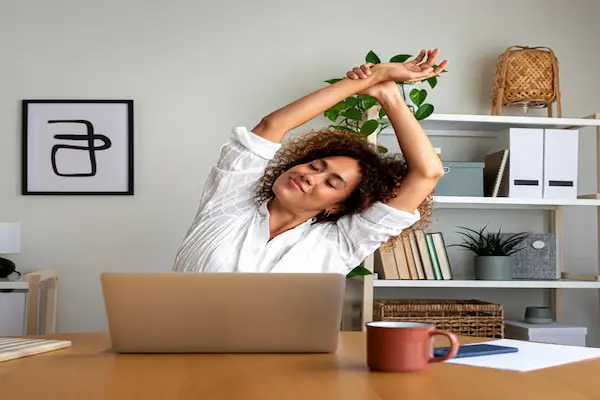
Many office workers spend most of the day at a desk, moving only from chair to meeting room to car or public transport seat, and although this routine may feel normal, it quietly adds up to a sedentary lifestyle that leaves the body stiff, tired, and low on energy by the time evening arrives.
Instead of thinking that the only solution is a long gym session before or after work, it helps to see that small fitness habits to sit less, spread across the day and woven into your existing routine, can make a powerful difference to how your back, hips, neck, and overall mood feel.
When the goal is to sit less rather than to become an athlete overnight, the strategy becomes much simpler and more realistic, because you focus on standing up more often, taking active breaks that fit inside your schedule, and using office movement as a tool to keep your body awake even when your brain is busy.
This article is independent and not sponsored or controlled by any institution, platform, or company mentioned in a general way, and it aims to give you practical, non-judgmental ideas that you can test, adapt, and keep only if they genuinely help your life and not just sound good in theory.
Throughout the next sections, you will find clear explanations, example routines, reminder ideas, simple stretches, and tracking templates designed specifically for someone who spends hours at a computer yet wants fitness habits to sit less and move more without changing jobs or adding complicated workouts.
Why Sitting Less Matters When You Already Have a Sedentary Lifestyle
The Hidden Effects of Long Sitting Periods
Remaining in a seated position for long stretches of time affects far more than just your comfort in the moment, because your muscles, joints, circulation, and even your concentration all respond to the lack of movement in ways that are easy to ignore until discomfort becomes hard to avoid.
- Hip flexors and front thigh muscles tend to become tight when they stay shortened for many hours, which can pull on your lower back and change the way you stand and walk.
- Upper back and neck areas often start to ache when you lean forward toward a screen, especially if your chair, screen height, or keyboard position are not adjusted for your body.
- Circulation in the legs can slow during long sitting sessions, which may lead to heavy or restless feelings in your feet and calves by the end of the day.
- Mental fatigue usually increases when your body stays still for too long, because brief movement breaks help reset focus and refresh your brain.
Because these effects appear gradually, many people accept them as a natural part of office life instead of seeing how small fitness habits to sit less and stand up more could reduce them significantly.
What “Sit Less” Actually Means in Everyday Life
Breaking a sedentary lifestyle does not require you to remove your chair completely or to stand all day, since both extremes can be uncomfortable and unrealistic; instead, the aim is to alternate positions more often, reduce very long sitting blocks, and include active breaks that keep your body engaged.
For an office worker, fitness habits to sit less can look like standing during some calls, walking for a few minutes after finishing a focused task, shifting between sitting and standing if you have an adjustable desk, and using short stretches to reset posture throughout the day.
Rather than adding extra pressure, this approach helps you turn movement into a normal part of your workflow, so that you no longer see “exercise” as something separate that must happen in a completely different block of time.
Foundations: How to Design Your Day to Stand Up More
Rethinking Your Workspace to Encourage Office Movement
Changing how your space is set up can make a huge difference, because when your environment invites movement, you need less willpower to follow through on your intention to stand up more often and take active breaks.
- Place frequently used items, such as the printer, wastebasket, or reference files, far enough away that you must stand and walk a few steps to reach them instead of spinning in your chair.
- If possible, adjust your workstation so that you have at least two clear positions available during the day, such as a primary sitting desk and a high surface for occasional standing work.
- Keep a small open space near your desk where you can easily perform two or three simple stretches or a brief active break without feeling cramped or self-conscious.
- Store a comfortable pair of supportive shoes at the office so that short walks or stair breaks feel easier and more comfortable than walking in formal shoes all day.
By turning your workspace into a place where office movement feels natural, you lower the friction that often stops good intentions from becoming daily habits.
Time Blocks and Triggers for Active Breaks
Planning when you will stand up and move, instead of waiting to remember in the middle of a busy task, makes it much more likely that your new fitness habits to sit less will actually happen.
Creating small time blocks and using triggers linked to your existing routine gives your brain clear instructions about when to move and when to stay focused on work.
- Decide how often you want to interrupt long sitting periods, such as every thirty, forty-five, or sixty minutes, depending on your workflow and meeting schedule.
- Choose simple actions that will happen during each active break, such as standing, stretching your chest, walking to get water, or performing a quick three-move sequence.
- Link these breaks to natural transitions, like finishing a call, sending a report, or completing a small task, so that each work victory becomes a trigger for movement.
- Use tools such as phone alarms, calendar reminders, or computer notifications to reinforce these triggers until they become more automatic.
Once these time blocks and triggers are in place, your day starts to include built-in pauses for movement, helping you stand up more without constantly thinking about it.
Practical Fitness Habits to Sit Less During Work Hours
An Example Hour-by-Hour Pattern for Active Breaks
Seeing an example layout can make it easier to imagine how fitness habits to sit less might fit into your real workday, especially if you are used to staying seated for several hours without a pause.
- Start of the day: After logging in, stand for one minute, roll your shoulders, and take ten slow deep breaths before sitting down.
- After the first forty-five minutes: Stand, walk to a window or the far wall of your office, stretch your arms overhead, and walk back.
- Mid-morning: Use a two to three minute active break for gentle calf raises, chest stretches, and a short hallway walk.
- Before lunch: Stand up, perform ten chair sit-to-stands, and then walk to lunch rather than staying seated until the last second.
- After lunch: Take a five minute walk before returning to your desk to clear post-meal sluggishness and reset your posture.
- Mid-afternoon: Use a quick stretch routine for your neck, wrists, and hips, then stand to read emails for a few minutes if possible.
- End of day: Close your computer, stand up, and perform a short full-body stretch to mark the end of work and the start of personal time.
This pattern is only a starting point, yet it demonstrates how often you can add office movement without disrupting your productivity.
Office Movement Ideas You Can Actually Use
Having a list of simple movement ideas ready makes it much easier to act quickly during short active breaks, instead of wasting time wondering what to do and then staying seated by default.
- Walk to the furthest restroom or water station instead of the closest one when you need a short pause.
- Take the stairs instead of the elevator for one or two floors, especially when going down, which is often easier at first.
- Stand during phone calls that do not require you to type, pacing slowly if you have enough space to do so safely.
- Combine office movement with tasks such as delivering a message in person rather than sending another email.
- Use the time while a large file uploads or a program restarts to stand, stretch, and move your joints rather than reaching for your phone.
These office movement options help transform ordinary moments into chances to stand up more and quietly reduce the total time you spend sitting.
Simple Stretches and Micro-Movements You Can Do in Office Clothes
Upper-Body Relief for Neck, Shoulders, and Wrists
Many desk workers feel tightness in the upper body long before they notice any other symptom of a sedentary lifestyle, so it makes sense to include quick stretches that can be performed right beside your workstation, even in formal clothing.
- Neck side stretch
- Sit or stand tall, let one ear gently move toward your shoulder, and keep both shoulders relaxed rather than lifted.
- Hold for three to five slow breaths, feeling a mild stretch along the side of your neck, then switch sides without forcing depth.
- Shoulder and chest opener
- Interlace your fingers behind your back or hold your wrists, gently lift your hands away from your body, and open your chest without thrusting your ribs forward.
- Breathe calmly as you hold for several breaths, noticing how the front of your shoulders and chest soften after a day of rounding toward the screen.
- Wrist and forearm ease
- Extend one arm forward with the palm facing up, then use the other hand to gently draw the fingers back toward you until you feel a comfortable stretch along the inner forearm.
- Repeat with the palm facing down to stretch the outer forearm, then change arms and perform the same steps.
Including these easy stretches as part of your fitness habits to sit less can reduce discomfort and make it feel more natural to change positions frequently.
Lower-Body and Back Refresh You Can Do Beside Your Chair
Lower back and hip tightness are common when you remain seated for many hours, so having a few quick movements for this area makes your active breaks more effective and satisfying.
- Hip flexor stretch
- Stand and take a short step back with one foot, bend the front knee slightly, and gently shift your weight forward while keeping the back heel lifted and your chest tall.
- Hold for several breaths, feeling a mild stretch at the front of the hip of the back leg, then change sides.
- Hamstring stretch with chair support
- Place one heel on a low, stable surface such as a chair seat or low step, keep your knee soft, and hinge forward gently from the hips while keeping your back long.
- Stop as soon as you feel a stretch in the back of your thigh, hold for a few breaths, then switch legs.
- Gentle standing back extension
- Stand with feet hip-width apart, place your hands on your lower back or hips, and slowly lean backward a small amount, lifting your chest without collapsing your neck.
- Return to neutral after one or two breaths and repeat several times, using the movement to counterbalance the forward curve of long sitting periods.
These movements, added into your active breaks, help your body feel refreshed, which makes it easier to maintain fitness habits to sit less throughout the workday.
A Three-Minute Full-Body Reset for Busy Moments
There will be times when you have only a tiny window between tasks, and a short, structured reset routine can help you use those three minutes well without needing to think or plan.
- Spend the first minute marching gently in place or walking around your desk area, letting your arms swing naturally and your posture lift.
- Use the second minute for upper body stretches, including shoulder rolls, neck tilts, and a chest-opening movement.
- Dedicate the third minute to lower body and back, performing light hip circles and a couple of standing back extensions.
Having this three-minute reset memorized means that whenever a reminder tells you to stand up more, you already know exactly what to do.
Reminder Systems So You Actually Remember to Move
Digital Prompts to Interrupt a Sedentary Lifestyle
Even with the best intentions, it is easy to get absorbed in a project and forget your commitment to active breaks, which is why external reminders are extremely helpful when building new fitness habits to sit less.
- Set gentle alarms on your phone or smartwatch at intervals that suit your workflow, such as every forty-five or sixty minutes, and label them with phrases like “stand up more” or “active break.”
- Use desktop applications or browser extensions that show small movement prompts on your screen after a set amount of keyboard or mouse activity.
- Schedule calendar events titled “office movement break” in the same way you schedule meetings, and allow notification pop-ups to act as a visual nudge.
These digital reminders do not judge or shout; they simply bring your attention back to your body so that you can choose to move before another hour passes in the chair.
Low-Tech Reminder Ideas and Environmental Cues
Not everyone enjoys multiple digital alerts, and sometimes the simplest low-tech reminders work just as well, especially when they are tied to physical objects in your daily environment.
- Place sticky notes with short messages like “stand, stretch, breathe” on the edge of your monitor, notebook, or water bottle.
- Keep a small stress ball, exercise band, or other movement-related object on your desk, using it as a visual symbol that encourages active breaks.
- Ask a colleague who also wants to move more to agree on a shared time when you both stand, walk, or stretch, turning movement into a social cue.
Combining digital and physical cues creates a network of reminders that gently supports your decision to adopt fitness habits to sit less and move more often.
Tracking Templates to See Your Progress Clearly
A Simple Daily Sit-Less Log
Tracking does not need to be complicated or time-consuming; a basic daily log can help you see whether your sedentary lifestyle is slowly changing, even when each individual day feels similar.
- Create a small table with columns for date, number of active breaks taken, longest sitting period, and notes about how your body felt.
- At the end of each day, spend one minute filling in approximate numbers, such as estimating whether you moved every hour or missed entire chunks of time.
- Use the notes column to mention small wins, like “stood during two calls” or “took the stairs twice,” so your brain notices progress.
This kind of log turns vague intentions into visible data, making your fitness habits to sit less feel more tangible and easier to adjust.
Weekly Review Checklist for Office Movement
Looking at your patterns over a week helps you understand which days are most challenging, which strategies are working, and what kind of adjustments might be necessary to keep momentum.
- Review how many days you took at least one active break every hour for most of the workday.
- Notice whether certain times, such as mornings or late afternoons, consistently have fewer breaks or longer sitting periods.
- Identify which reminder tools you actually responded to and which ones you tended to ignore.
- Choose one small change to test next week, such as adding a new stretch, adjusting reminder timing, or inviting a coworker to join your active breaks.
Using this weekly checklist makes your office movement more deliberate, while still keeping the tone solution-focused and non-judgmental.
Example Layout for a “Sit Less at Work” Tracker
To make things even more practical, you can design a simple page or spreadsheet to track your fitness habits to sit less in a structured way.
- Columns: Date, total hours worked, number of active breaks, longest sitting stretch, number of times you stood during calls.
- Optional columns: mood level before work, mood level after work, body comfort score (from one to ten), notes about specific successes or challenges.
- Rows: One row per workday, with a separate section for weekly summary and one key insight learned.
When you fill this tracker regularly, you create a clear picture of how your sedentary lifestyle is changing over time and which fitness habits to sit less have the biggest impact for you personally.
A One-Week Experiment to Build Fitness Habits to Sit Less
Days One and Two: Observation and Setup
Starting with observation rather than immediate change can make the process feel more manageable, because you first understand your real baseline before trying to improve it.
- Spend the first day tracking roughly how often you stand up, how long your sitting blocks last, and which parts of your body feel most uncomfortable by the evening.
- Use the second day to adjust your workspace slightly, gather any props you need for stretching, and set up reminder systems without yet forcing strict movement goals.
By the end of day two, you will know where your main challenges lie and which tools will support your upcoming active breaks.
Days Three to Five: Implementing Active Breaks and Office Movement
The middle of your one-week experiment is where you begin to apply the ideas, test different timing strategies, and notice how your body responds to standing up more often.
- Commit to one short active break every hour during core work hours, even if the break lasts only one or two minutes.
- Choose one upper-body and one lower-body stretch to repeat at least three times per day.
- Stand during at least one phone call or virtual meeting each day whenever practical.
- Record your breaks in your daily sit-less log so that your efforts do not blur together and disappear from memory.
These three days are an opportunity to discover which fitness habits to sit less feel easy and which require additional support or adjustment.
Days Six and Seven: Review, Adjust, and Plan Forward
The final part of your experiment focuses on looking back at what happened, valuing the steps you took, and turning helpful actions into ongoing habits rather than letting the week be a one-time project.
- Review your tracker and notice any reduction in long sitting periods, such as fewer stretches longer than two hours.
- Identify the top three strategies that worked best for you, whether they were specific stretches, certain reminders, or a new way of organizing your space.
- Choose one or two habits that you want to keep permanently, and commit to maintaining them for the next month.
- Optional: add one new habit for the coming week, such as a daily three-minute full-body reset or a short walk after lunch.
With this review, your one-week test of fitness habits to sit less becomes the foundation for long-term change instead of a brief burst of effort.
Bringing It All Together: Sit Less Without Blaming Yourself
Spending many hours at a desk is a common part of modern work, and feeling the effects of a sedentary lifestyle is not a personal failure but a natural response to the environment and demands placed on your body.
Small, realistic fitness habits to sit less—such as standing up more often, taking active breaks, using office movement, and adding simple stretches—give you practical ways to care for your body while still honoring your professional responsibilities.
Reminder systems, tracking templates, and one-week experiments help you stay solution-focused, turning every day into another chance to adjust your routine and discover which changes genuinely help you feel better.
Over time, these actions add up, and you may notice that your posture improves, your energy remains more stable, and your workday feels less draining, even though your job itself has not changed.
By choosing to sit less in gentle, sustainable ways, you show respect both for your health and for the reality of your life, proving that meaningful movement is possible even in a chair-centered world.