
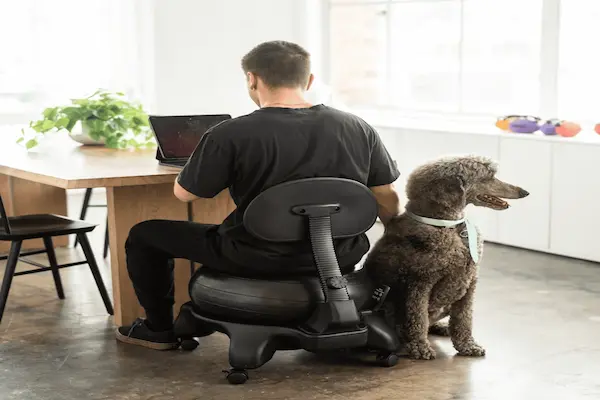
Long hours in front of a computer, tablet, or phone can gradually pull the head forward, round the shoulders, and leave the lower back feeling tight or tired, and although this may seem like a normal side effect of modern work, these small changes in desk posture can quietly overload joints and muscles over time.
Rather than imagining posture as something fixed or “good” versus “bad,” it helps to think of it as a dynamic pattern that responds to how you sit, stand, and move throughout the day, which means that small fitness habits to improve posture can slowly reshape these patterns in a way that supports back health instead of straining it.
The goal is not a perfectly straight, rigid position that you must hold all day, because that would also be uncomfortable and unrealistic, but rather a range of posture tips, alignment exercises, desk setup ideas, and daily movements that allow your body to shift between supported positions without collapsing into long, slumped shapes that irritate tissues and make you feel older and more tired by evening.
This guide offers clear, practical suggestions designed for a worker who spends many hours with screens and wants posture-friendly habits that fit naturally into real life, with careful attention to comfort, safety, and gradual change rather than quick, unrealistic promises.
Understanding How Posture Works in Everyday Life

Posture as a Moving Pattern, Not a Frozen Shape
Instead of picturing posture as a single perfect pose, it is more accurate to see it as the way your body organizes itself while you carry out daily tasks, whether that means typing, lifting, walking, or relaxing on the sofa.
Muscles, joints, and ligaments constantly share the load of your body weight, and when you spend long periods in one position, particularly a slouched or twisted one, certain areas start carrying more than their share, while others switch off and contribute less than they should.
- Head and neck posture often follow where your eyes go, so screens placed too low or too far away encourage a forward head position.
- Shoulders naturally round inward when the upper back muscles stay underused and chest muscles are allowed to tighten over time.
- Lower back curves can become either overly flattened or excessively arched, depending on chair height, seat depth, and the way you sit.
Because posture is influenced by these everyday choices, fitness habits to improve posture work best when they combine desk posture adjustments with gentle strengthening and stretching that support better alignment from multiple directions.
Common Signs Your Posture Habits Need Attention
Posture rarely changes overnight, so the early signs that your body wants different habits can be subtle and easy to dismiss as random aches, yet paying attention to them can help you act before discomfort becomes more persistent.
- Frequent stiffness or burning sensations between the shoulder blades after long sessions at the computer.
- Regular neck tightness or mild headaches that seem to appear toward the end of a screen-heavy day.
- A feeling of compression or fatigue in the lower back after sitting for meetings, commuting, or using mobile devices.
- Difficulty maintaining an upright position without quickly sliding or slumping back into a rounded posture.
These signals do not automatically mean that something is seriously wrong, but they do suggest that posture tips, alignment exercises, and small changes in daily movement could bring meaningful relief and support back health over time.
Desk Setup Suggestions That Support Better Posture
Screen Height and Distance for Neck and Eye Comfort
Screen position has a large influence on head and neck posture, and even minor adjustments can reduce the urge to crane forward or tilt downward for long periods.
- Place the top of your main monitor roughly at or slightly below eye level, so your gaze falls gently downward rather than sharply.
- Keep the screen at a distance where you can read text comfortably without leaning forward, usually about an arm’s length for many people.
- If you use a laptop for extended periods, consider raising it on a stand or stack of books and using an external keyboard to avoid constant neck flexion.
- Position frequently used secondary screens close to your main line of sight, reducing repeated twisting of the neck and upper back.
Simple changes like these make it easier for fitness habits to improve posture because your environment stops pulling you into unhelpful positions.
Chair, Hips, and Feet for Balanced Desk Posture
A supportive sitting base gives your spine a better chance to align naturally, so adjusting the chair and how you use it becomes a core part of posture-friendly habits.
- Adjust seat height so your hips are roughly level with or slightly higher than your knees, allowing the pelvis to tilt gently forward rather than rolling backward.
- Keep both feet flat on the floor or on a stable footrest instead of tucking them under the chair, crossing tightly, or letting them dangle.
- Sit so that your back can contact the backrest, especially at the lower back, using a small cushion or rolled towel if needed to maintain a gentle natural curve.
- Avoid sitting on the very edge of the chair for long stretches, since this often leads to fatigue and collapse into a rounded position.
With this base in place, your alignment exercises and posture tips will have a more solid foundation to work from.
Keyboard, Mouse, and Arm Support to Reduce Strain
Upper body posture strongly depends on where your hands go, and when keyboards or mice are positioned poorly, shoulders and wrists often pay the price.
- Place the keyboard at a height where your elbows can bend around ninety degrees with your upper arms relaxed close to your sides.
- Keep the mouse close enough that you do not have to reach forward or far to the side, which tends to pull the shoulder and upper back into awkward positions.
- Use armrests only if they support the forearms lightly without forcing the shoulders upward toward the ears; otherwise, consider lowering or not using them.
- Check occasionally that your wrists are not constantly bent sharply up or down while typing and adjust keyboard angle or chair height to soften these angles.
When your hands, arms, and shoulders work in more neutral positions, back health generally benefits, and desk posture becomes easier to maintain throughout the day.
Daily Fitness Habits to Improve Posture at Your Desk
Micro-Breaks That Keep Your Body from Locking Up
Even an excellent desk posture becomes tiring if held too long without movement, so small, regular breaks help your body redistribute pressure and remind muscles to stay active.
- Stand up at least every thirty to sixty minutes, even if only for thirty to sixty seconds, to reset your spine, hips, and shoulders.
- Use short breaks to roll the shoulders, gently rotate the neck, and take a few steps, rather than immediately checking another screen.
- Combine micro-breaks with necessary actions such as refilling water, using the restroom, or grabbing a document, so movement fits naturally into your work pattern.
- Alternate between different sitting positions, such as slightly more forward on the chair or slightly reclined, while maintaining general support and alignment.
These micro-movements may seem small, yet over many weeks they form part of the foundation of long-term posture tips that actually influence how your body feels.
A One-Minute Posture Reset You Can Do Several Times a Day
Having a quick, repeatable alignment exercise sequence makes it easier to respond whenever you notice that your body has slipped into a less comfortable position.
- Sit or stand tall, place both feet firmly on the floor, and gently imagine lengthening your spine upward as if a thread is lifting the crown of your head.
- Allow your shoulders to roll up, back, and down in a smooth circle, then let them settle in a relaxed position rather than pulled backward aggressively.
- Draw your chin very slightly backward, as though you are giving yourself a subtle “double chin,” to bring the head back over the shoulders without tilting upward.
- Breathe slowly in through the nose and out through the mouth for three to five breaths, maintaining this aligned position without forcing it.
Repeating this brief reset regularly helps your nervous system recognize what a more neutral posture feels like, making it easier to return to it throughout the day.
Basic Strengthening Moves That Support Back Health
Guidelines Before Trying Alignment Exercises
Before starting any strengthening routine, especially if you already experience significant pain or have known spine or joint conditions, it is sensible to move cautiously and to seek professional advice if you are uncertain which exercises are appropriate for you.
Gentle, controlled movements that do not cause sharp pain, severe discomfort, or unusual symptoms are typically more suitable than intense or fast routines, particularly when your goal is to develop fitness habits to improve posture gradually and safely.
- Stop or modify any exercise that produces sharp, burning, or radiating pain rather than mild muscle effort or stretch.
- Begin with small ranges of motion and fewer repetitions, increasing only when your body feels ready.
- Focus on comfortable breathing and avoid holding your breath during strengthening work.
With these guidelines in mind, you can explore basic alignment exercises that gently strengthen areas important for posture.
Core Engagement for a More Stable Spine
The muscles around your abdomen, sides, and lower back help stabilize the spine so that shoulders and neck do not have to work as hard to support your head and upper body.
- Seated core brace
- Sit upright on a chair with feet flat on the floor and hands resting gently on your thighs.
- Imagine tightening your abdominal area as if bracing lightly for a soft poke, without holding your breath or rounding your back.
- Hold this engagement for a count of five to ten, then relax completely and repeat eight to ten times.
- Wall plank variation
- Stand facing a wall and place your forearms against it at shoulder height, stepping your feet back so your body forms a gentle diagonal line.
- Engage your core and glutes lightly, keeping your body straight from head to heels without letting the lower back sag.
- Hold for ten to twenty seconds, breathing steadily, then rest and repeat for several rounds as tolerated.
These simple moves target core endurance more than raw strength, which is particularly useful for daily posture support.
Upper Back and Shoulder Strength for Better Desk Posture
When the muscles across the upper back and rear shoulders are stronger, they can more easily counter the tendency of the chest and front shoulders to pull everything forward toward the screen.
- Seated row with band or towel (light resistance)
- Sit tall and hold a light resistance band or a sturdy towel with both hands, arms extended in front of you at about chest height.
- Pull your hands backward as if rowing, guiding your elbows along your sides while gently squeezing your shoulder blades toward each other.
- Return slowly to the starting position and repeat eight to twelve times, focusing on smooth movement rather than heavy effort.
- Prone or standing shoulder squeezes
- Either lie face down on a mat with a pillow under your chest for comfort or stand leaning slightly forward with hands resting on a table.
- Gently draw the shoulder blades together and slightly downward, avoiding lifting the shoulders toward the ears.
- Hold for three to five seconds and release, repeating ten to fifteen times, ensuring the neck stays relaxed.
These back health exercises are intended to create a feeling of support rather than tightness, so intensity should remain modest, especially at the beginning.
Gentle Stretching Routine to Ease Tension
Chest and Shoulder Stretch to Offset Rounded Positions
Chest muscles often tighten when shoulders are pulled forward for long periods during typing, phone use, or driving, which makes it more difficult to return to an open, comfortable posture without a deliberate stretch.
- Stand near a doorway or wall corner, placing your forearm on the surface with your elbow roughly at shoulder height.
- Take a small step forward with the leg on the same side and gently lean your body forward until a mild stretch is felt across the chest and front of the shoulder.
- Hold this position for fifteen to thirty seconds while breathing steadily, then repeat on the other side.
Stretching in this way should feel relieving, not painful, and a very gentle angle is often enough when you first begin addressing posture tips like these.
Neck and Upper Back Mobility to Reduce Tightness
Neck and upper back areas frequently hold tension from screen work and stress, so controlled, soft movements can help restore comfortable mobility.
- Sit upright and slowly turn your head to look over one shoulder, stopping when you feel a mild stretch without forcing the movement; hold briefly and return to center before repeating to the other side.
- From the same seated position, allow the right ear to drift gently toward the right shoulder while the left shoulder stays relaxed and heavy, then hold for several breaths before switching sides.
- Perform small, slow shoulder rolls forward and backward, feeling the shoulder blades glide along the ribcage without rushing.
These alignment exercises are more about smooth, pain-free motion than about reaching extreme positions, and they can easily fit into short breaks throughout the day.
Hip and Lower Back Stretching for Long Sitting Relief
Hips and lower back often feel tight after many hours of sitting, and gentle stretches for these areas can support overall posture because they allow the pelvis and spine to rest in a more neutral position.
- Seated hip stretch
- Sit closer to the front of your chair with feet flat, then cross one ankle over the opposite knee, forming a loose figure-four shape.
- Lean forward slightly from the hips while keeping the back comfortably long until a moderate stretch is felt in the crossed leg’s hip.
- Hold for fifteen to thirty seconds and repeat on the other side, staying within a range that does not cause pinching or pain.
- Knees-to-chest variation (if comfortable on the floor)
- Lie on your back on a mat and gently draw one knee toward your chest while the other leg rests bent or straight on the floor.
- Hold the position with light hands on the shin or behind the thigh, avoiding forcing the knee too close.
- Switch legs after fifteen to twenty seconds and, if comfortable, briefly try drawing both knees in together with small movements.
Stretching in this controlled way helps support back health and complements the strengthening habits designed to improve posture.
Reminder Ideas to Keep Posture-Friendly Habits Alive
Digital Tools to Prompt Movement and Alignment
Remembering to adjust posture and take active breaks can be difficult when work feels urgent, so gentle reminder systems help you act on your intentions even during busy days.
- Set repeating alarms on your phone, watch, or computer to suggest standing up, stretching, or performing your one-minute posture reset every thirty to sixty minutes.
- Use calendar events or task reminders labeled with phrases like “posture check” or “alignment exercises” at key times during the day, such as mid-morning and mid-afternoon.
- Enable subtle desktop notifications from reminder apps that nudge you to relax your shoulders, adjust your desk posture, and look away from the screen for a moment.
These prompts do not need to be loud or disruptive; they simply bring your awareness back to your body so you can apply the posture tips you have chosen.
Low-Tech Cues in Your Work Environment
Physical cues in your environment can be just as effective as digital reminders, especially if you prefer fewer alerts or share a workspace where constant alarms are not practical.
- Place a small note at the edge of your monitor with simple messages such as “sit tall,” “soft shoulders,” or “stand soon.”
- Keep a lightweight resistance band or small ball on your desk as a visual reminder to do a few strengthening or alignment exercises during short pauses.
- Use the act of drinking water, finishing a call, or sending a report as a mental cue that it is time for a quick posture check or a brief stretch.
By integrating reminders into everyday objects and actions, you create a natural support system for your fitness habits to improve posture.
Basic Tracking Templates to Notice Progress
Simple Daily Posture Habit Log
Tracking your actions does not need to be complicated; even a basic log can make you more aware of how often you practice new habits and how they influence your comfort.
- Create a small table with columns such as Date, Desk Setup Checked, Micro-Breaks Taken, Strength Exercises Done, and Stretches Completed.
- At the end of each workday, mark how many times you used your posture reset, how many breaks you took, and whether you completed any planned alignment exercises.
- Include a short notes section where you rate neck, shoulder, or back comfort for the day on a simple scale, such as one to ten.
Over time, patterns often emerge, and you may notice that days with more movement and posture-friendly habits correlate with better back health and overall comfort.
Weekly Checklist for Posture-Friendly Fitness Habits
A weekly review helps you adjust without harsh judgment, turning posture change into a gentle, ongoing project rather than a strict challenge.
- Did you adjust your desk posture and screen setup at least once this week to support better alignment.
- How many days did you take regular micro-breaks from sitting and screen focus.
- On how many days did you complete at least one basic strengthening exercise for core or upper back.
- During the week, did you stretch tight areas such as chest, hip, or neck at least two or three times.
- Did you notice any change in stiffness, discomfort, or ease of sitting upright compared with previous weeks.
Checking these items encourages you to focus on actions you can control, rather than expecting posture to transform instantly.
Staying Cautious and Adapting to Your Own Body
Listening to Signals That Suggest You Should Modify
While many people can safely begin gentle fitness habits to improve posture on their own, it remains important to respect your body’s signals and adjust if certain movements or positions do not feel right.
- Stop or change any exercise that causes sharp, shooting, or worsening pain rather than mild, even muscle effort.
- Avoid pushing into stretches that create tingling, numbness, or joint pain, particularly along the spine or into the arms and legs.
- Be cautious with exercises that require deep bending or twisting if you already have known back issues, and consider discussing options with a qualified professional.
Proceeding gradually allows your body to adapt safely and helps prevent strain while you explore new alignment exercises and posture habits.
Situations Where Professional Input May Be Helpful
Some circumstances make it especially sensible to seek tailored guidance from a health or movement professional who can assess your individual needs and suggest specific modifications.
- History of significant back injuries, spinal surgery, or diagnosed structural conditions affecting posture.
- Persistent pain that does not improve with rest or gentle posture tips and that interferes with daily activities.
- New or unexplained symptoms such as strong numbness, tingling, weakness, or loss of coordination.
Receiving individualized advice in such situations can complement the general fitness habits described here and help you build a posture-friendly lifestyle with additional safety.
Bringing Fitness Habits to Improve Posture into Everyday Life
Improving posture rarely comes from one big change or a single exercise; instead, it grows from many small decisions repeated throughout the day, such as how you set up your desk, how often you stand, and which alignment exercises you practice when stiffness appears.
Simple posture tips like adjusting screen height, supporting your lower back, and placing feet firmly on the floor, combined with basic strengthening and stretching work for the core, back, shoulders, and hips, can gradually reduce the discomfort that often comes from long hours with screens.
Reminder systems and tracking templates make it easier to remember your new habits and to see the quiet progress that might otherwise go unnoticed, which can be motivating when immediate visual changes in posture are not yet obvious.
Over weeks and months, these fitness habits to improve posture can turn into a routine part of your workday, supporting back health and overall comfort without requiring dramatic lifestyle changes or complex equipment.
As you continue to listen to your body, adjust your desk posture, and choose alignment exercises that feel safe and effective for you, posture-friendly living can become less of a special project and more of a natural part of how you move, sit, and work every day.