
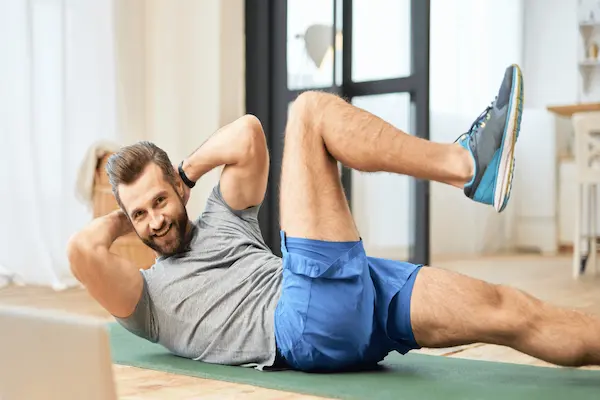
Remote work can feel convenient on the surface, yet long hours at the desk quietly build up stiffness, tiredness, and brain fog.
Instead of treating fitness as one long workout you never quite start, it becomes much easier when movement turns into tiny, realistic actions woven through the day.
Short, smart workout ways for remote workers fit naturally between calls, emails, and deep-focus tasks, so activity stops competing with your schedule and starts supporting it.
Micro-workouts respect your energy and your workload, which means you can stay consistent even when life feels busy and unpredictable.
Every small block of movement becomes a pressure-free deposit in your health account, helping your body feel more awake and comfortable while you work.
Throughout this guide, the focus stays on home office workout ideas, active breaks, chair exercises, and stretch ideas that work in real life, not in some perfect routine.
No equipment is required for any of the movements here, and you can adapt timings or intensity to match your current fitness level and daily rhythm.
Before going deeper, it helps to remember that this content is independent and does not have any affiliation, sponsorship, or control from platforms, institutions, or other third parties mentioned indirectly.
This information is educational and should not replace personalized medical or professional advice, especially if you live with injuries or specific health conditions.
Why micro-workouts fit remote workers so well

Traditional workout advice often expects long sessions and heavy motivation, which can feel unrealistic when your calendar is full and your mind is already tired.
Micro-workouts break movement into pieces of one, three, five, or ten minutes, which suddenly makes being active feel possible rather than overwhelming.
Short bursts of movement boost circulation, gently raise your heart rate, and help your mind reset, without demanding a big chunk of uninterrupted time.
When the focus shifts from intensity toward consistency, it becomes easier to show up most days and skip the perfectionism that usually leads to guilt and inactivity.
Remote workers benefit especially from this approach, because the same schedule that keeps you at home also gives you flexible pockets where you can move.
Door frames, chairs, walls, and tiny pieces of floor space turn into tools for home office workout blocks that feel natural instead of forced.
The hidden cost of sitting all day
Hours in front of a screen encourage rounded shoulders, a forward head, and compressed hips, which all contribute to the feeling of being stiff and drained by evening.
Static postures restrict blood flow, limit joint mobility, and gradually teach your body that stillness is normal and movement is unusual.
Muscles in your chest and hip flexors often tighten, while glutes and upper back muscles tend to switch off and stop supporting posture effectively.
These patterns can lead to discomfort in the neck, shoulders, lower back, and even headaches or eye strain by the end of the day.
Integrating short active breaks throughout your working hours interrupts these patterns before they lock in, giving your body regular chances to realign and wake up.
Instead of one big correction at the gym, your body receives many small nudges toward healthier movement and more comfortable posture.
Simple workout ways for remote workers you can start today
Beginning does not need to be complicated, because the most important step is learning how to sprinkle movement into existing moments.
Short blocks of one, three, and five minutes can slide between tasks, calls, and emails without drawing attention or demanding equipment.
The next ideas show how easily you can turn tiny slivers of time into effective micro-workouts that actually happen.
One-minute emergency boosters
Whenever you have sixty seconds before a meeting or while a file loads, any of these quick moves can loosen tension and wake up your muscles.
- March in place with relaxed shoulders, lifting your knees comfortably and letting your arms swing freely.
- Roll each shoulder slowly forward and backward, focusing on smooth, controlled motion rather than speed.
- Reach both arms overhead and gently lean to each side, stretching through your ribs and waist.
- Rise up onto your toes and lower your heels repeatedly to activate your calves and improve circulation.
- Stand tall and gently twist your torso from side to side, allowing your arms to swing softly.
Placing one or two of these single-minute moves throughout the day builds a surprising amount of activity with almost no friction.
Three to five-minute active breaks that fit real schedules
When a slightly longer gap opens between tasks, three to five minutes allows for mini routines that touch several parts of your body at once.
- Spend one minute doing gentle squats, lowering only as far as feels comfortable while keeping your chest lifted.
- Take another minute for wall push-ups, placing your hands at chest height and lowering your body toward the wall in a straight line.
- Use one minute for alternating step-backs, stepping one foot behind you into a shallow lunge before switching sides.
- Add a minute of arm circles, drawing slow circles forward and then backward with soft elbows and relaxed neck.
- Finish with one minute of easy forward folds, hinging from your hips and letting your upper body hang before rolling up slowly.
Five minutes of this kind of home office workout can act as a reset button for both your body and your concentration.
Home office workout blocks for each part of the day
Anchoring movement to specific parts of the day helps build routines that do not depend on motivation alone.
Instead of asking yourself whether you feel like moving, you simply follow a small script each time a familiar moment arrives.
The following home office workout blocks give you ready-made templates for morning, midday, afternoon, and evening.
Morning activation routine in five minutes
The first minutes after logging in set the tone for your body, so a short session can encourage alertness from the start.
- Walk gently around your room or march in place for ninety seconds while breathing steadily through your nose.
- Perform one minute of hip circles, moving your hips slowly in one direction and then the other while keeping your feet rooted.
- Take one minute for chest-opening stretches, clasping your hands behind your back and lifting them slightly as you open your chest.
- Spend thirty seconds on slow neck side bends, tilting toward each shoulder while keeping your shoulders relaxed.
- Use one minute for standing knee lifts, tapping your opposite hand to your knee to engage your core and coordination.
Completing this sequence before opening your inbox helps your body feel awake and grounded before the mental load of the day begins.
Ten-minute lunch reset home office workout
Midday often brings both physical stiffness and mental clutter, which makes this a perfect moment for a slightly deeper routine.
- Begin with two minutes of light cardio, such as step touches, side-to-side steps, or gentle dancing to one upbeat song.
- Move into two minutes of squats, keeping your weight in your heels and your knees tracking in line with your toes.
- Follow with two minutes of alternating reverse lunges, stepping back only as far as you can control comfortably.
- Add two minutes of standing rows using a resistance band, towel, or imaginary tension by drawing your elbows backward.
- Finish with two minutes of stretch ideas focused on hips and chest, holding each stretch for about twenty to thirty seconds.
Even when lunch itself feels rushed, combining food with this ten-minute block builds a strong habit of moving in the middle of your day.
Afternoon slump saver micro-workout
The classic afternoon energy dip often tempts you toward endless scrolling or another coffee, yet a short burst of movement usually brings cleaner energy.
- Stand up and perform one minute of side lunges, stepping out to the side and gently bending the knee while keeping the other leg straight.
- Continue with one minute of calf raises while holding a chair or wall for balance if needed.
- Add one minute of arm swings, swinging both arms forward and backward in a relaxed rhythm.
- Finish with one or two minutes of seated chair exercises, such as leg marches or seated torso rotations.
This kind of active break boosts blood flow without leaving you sweaty, so you can return to work feeling refreshed and still camera ready.
Evening unwind and transition sequence
Logging out while still tense makes it harder to enjoy your personal time, so a brief evening sequence can mark a clean transition out of work mode.
- Start with one minute of slow cat-cow movements on the floor or seated, gently arching and rounding your spine.
- Move into two minutes of hip flexor stretches, stepping one foot forward and shifting your weight until you feel a gentle front-of-hip stretch.
- Add two minutes of figure-four stretches, crossing one ankle over the opposite knee and leaning forward slightly.
- Finish with two minutes of deep belly breathing, inhaling slowly through your nose and exhaling longer through your mouth.
Using this short ritual whenever you close your laptop teaches your brain that the workday has ended and recovery time has begun.
Active breaks that blend naturally with your tasks
Finding time for movement becomes easier when you attach it to events that already happen several times a day.
Each recurring situation can act as a trigger that reminds you to take an active break instead of staying frozen at the desk.
Common triggers you can convert into movement cues
- Treat the moment just before a meeting starts as a cue for a sixty-second posture reset or a brief stretch.
- Use the end of a deep work block as a cue for a three-minute walk around your home or building.
- Consider file uploads or code compilation times as permission for quick chair exercises rather than phone scrolling.
- Attach movement to coffee or tea breaks by promising yourself one or two short exercises before taking a sip.
- Let every water refill become a cue for calf raises, shoulder rolls, or a few neck stretches.
When movement piggybacks on routines that already exist, you do not need to rely entirely on willpower or memory to stay active.
Reusable active break templates
Having ready-made templates avoids decision fatigue, because you already know what you will do when a trigger appears.
- Create a one-minute template with marching in place, arm circles, and deep breathing.
- Build a three-minute template made of squats, wall push-ups, and a forward fold stretch.
- Prepare a five-minute template using lunges, glute bridges, and chest-opening stretches.
- Design a seated-only template including leg extensions, seated twists, and wrist stretches.
- Keep a relaxing template with gentle neck stretches, slow breathing, and eye relaxation drills.
Writing these templates on a small card or note beside your screen makes it easier to start moving without overthinking.
Chair exercises for days you barely leave the desk
Some days are dominated by video calls or tight deadlines, and standing every thirty minutes simply does not feel realistic.
On those days, chair exercises offer a discreet way to keep your body engaged while you remain close to your camera and microphone.
Lower-body chair exercises
- Perform seated marches by lifting one knee and then the other without leaning backward, engaging your hips and core.
- Try seated leg extensions, straightening one leg until it is almost parallel to the floor and holding briefly before switching sides.
- Raise your heels repeatedly for seated calf raises, pressing the balls of your feet into the floor with each lift.
- Slide your feet slightly apart and perform mini seated squats by pushing through your legs and lifting your hips one or two centimeters off the seat.
- Cross one ankle over the opposite knee to create a seated figure-four position and hold gently to stretch the outer hip.
Upper-body and core chair exercises
- Scoot to the front of your chair and sit tall, then squeeze your shoulder blades together for a few seconds before relaxing them.
- Place your hands behind your head lightly and rotate your torso slowly from side to side for controlled seated twists.
- Brace your abdominal muscles gently as if preparing for a cough, hold for a few breaths, and release for a subtle core exercise.
- Press your palms into the sides of your chair and lift your chest slightly to activate your upper back and arms.
- Reach one arm overhead and lean to the opposite side for a seated side stretch, then change sides.
Even when you remain seated for a long stretch of time, these moves can reduce stiffness and support better posture without drawing too much attention.
Stretch ideas for typical remote worker tight spots
Specific areas of the body tend to complain more loudly when you work at a desk, especially the neck, shoulders, hips, and eyes.
Targeting these areas with short, regular stretch ideas can relieve discomfort and stop it from building into something more serious.
Neck and shoulder rescue options
- Lower one ear toward your shoulder while keeping both shoulders relaxed, then switch sides after several breaths.
- Tuck your chin slightly toward your chest and gently lengthen the back of your neck without rounding your entire spine.
- Cross one arm across your chest and use the other hand to guide it closer, feeling a stretch along the back of your shoulder.
- Interlace your fingers behind your head and gently draw your elbows slightly inward to stretch the muscles at the back of your neck.
- Roll your shoulders slowly forward and backward, creating smooth half circles rather than quick shrugs.
Back and hip releases
- Sit tall at the edge of your chair, place your hands on your thighs, and alternate between arching and rounding your back for a seated cat-cow flow.
- Stand up and draw slow circles with your hips, first in one direction and then in the opposite direction.
- Step one foot back and bend the front knee slightly while keeping your torso upright to stretch the front of your hip.
- Place one foot on a low stool or sturdy object and hinge forward gently to stretch your hamstring.
- Lie on your back if space allows, hug both knees toward your chest, and rock gently from side to side.
Hands, wrists, and eye relief
- Extend one arm with the palm facing up and gently draw the fingers back with the other hand to stretch the forearm.
- Flip your palm downward and again pull your fingers carefully toward your body to stretch the opposite side.
- Clench your fists firmly for a moment, open your hands wide, and repeat several times to reduce hand stiffness.
- Look away from the screen toward something far in the distance for about twenty seconds to relax your eye muscles.
- Close your eyes briefly and take slow breaths, allowing your facial muscles to soften with each exhale.
Pairing these stretches with your active breaks results in a workday that feels much kinder on joints, muscles, and eyes.
Setting up reminders so movement actually happens
Knowledge turns into habit only when your environment and tools help you remember what you intend to do.
Well-designed reminder systems reduce the mental load of staying active and stop movement from becoming another forgotten task.
Digital reminder systems
- Add short calendar events labeled with specific actions, such as “three-minute stretch break” or “five-minute chair workout.”
- Set recurring alarms on your phone at natural transition times, like midmorning, lunchtime, and midafternoon.
- Use habit-tracking apps to check off each active break, turning your day into a simple game of completing small actions.
- Create desktop notifications that show simple instructions such as “stand up, roll shoulders, breathe slowly for one minute.”
- Experiment with browser reminders or pinned notes in your task manager that say “move briefly before opening this.”
Physical and environmental cues
- Place a resistance band, yoga mat, or small dumbbells where you can see them instead of hiding them in a closet.
- Stick small notes on your monitor with phrases like “sit tall” or “take a sixty-second active break.”
- Keep a printed list of your favorite workout ways for remote workers next to your keyboard or notebook.
- Use your water bottle as a trigger by deciding that every refill will come with at least one short exercise.
- Arrange your chair and screen so that standing up and stepping aside for a quick move feels easy instead of obstructed.
Combining both digital and physical reminders builds a friendly support system that nudges you toward movement all day long.
Mix-and-match workout ways for remote workers toolkit
Having flexible building blocks makes it simple to assemble quick routines that match your energy, mood, and schedule.
Think of the following mix-and-match ideas as a menu where you can pick one option from each group to design your own micro-workout.
Three-minute combination ideas
- Combine marching in place, wall push-ups, and a forward fold stretch for a balanced full-body burst.
- Use squats, seated leg extensions, and shoulder rolls when your legs feel heavy and your shoulders feel tight.
- Mix side lunges, calf raises, and torso twists for a gentle cardio-style break that stays low impact.
- Pair seated marches, wrist stretches, and deep breathing when you cannot leave your chair but still want relief.
- Choose neck stretches, chest opening, and eye relaxation when screen fatigue feels stronger than physical tension.
Ten-minute combination ideas
- Build a full-body session with light cardio, squats, lunges, rows, and hip stretches.
- Create a posture-focused block using wall slides, scapular squeezes, core bracing, and chest stretches.
- Plan a lower-body emphasis with walking, glute bridges, step-backs, and hamstring stretches.
- Design an upper-body and core routine with wall push-ups, rows, bird-dogs, and torso rotations.
- Assemble a recovery-focused set with hip circles, gentle yoga-style stretches, breathing, and eye relaxation.
Example weekly structure using micro-workouts
A simple weekly structure makes it easier to stay consistent without needing to design new routines every day.
- On Monday, aim for a five-minute morning activation and one three-minute afternoon active break.
- On Tuesday, focus on legs with a ten-minute lunch home office workout plus brief chair exercises during calls.
- On Wednesday, put more attention on posture with several one-minute posture checks spread through the day.
- On Thursday, emphasize core and stability with short blocks of glute bridges, bird-dogs, and standing balance work.
- On Friday, choose playful movement like dancing or light cardio plus relaxing stretches to celebrate the week.
- On Saturday, take an optional longer walk, gentle yoga session, or enjoyable outdoor activity if possible.
- On Sunday, perform only light stretching and breathing and reset your reminders for the week ahead.
Adjusting this outline to your personal demands keeps the structure intact while still respecting your unique responsibilities and energy levels.
Mindset tips to stay consistent without pressure
Many remote professionals know they should move more, yet pressure and perfectionism often block the first step.
Supporting your mindset with kinder expectations can be just as important as choosing the right exercises.
Tiny wins and self-compassion
- Count every minute of movement as a real success rather than dismissing it as insignificant.
- Accept that some days will be lighter and others richer in activity, and see the bigger trend rather than judging single days.
- Talk to yourself as you would speak to a close friend who is trying to build a new habit under stress.
- Focus on how your body feels after even the smallest active break and use that feeling as future motivation.
- Remind yourself that missing a session never cancels your progress; it simply offers an opportunity to restart with the next break.
Tracking progress that truly motivates you
- Track the number of active breaks you complete each day rather than only minutes or calories.
- Mark days on a calendar when you complete at least one home office workout, no matter how short.
- Notice practical changes such as easier posture, less stiffness, or better focus instead of waiting for dramatic visual transformations.
- Celebrate small streaks of two, three, or five days in a row to keep momentum playful and encouraging.
- Review your habits at the end of each week and choose one small improvement for the next one.
Tracking in this gentle way keeps movement aligned with your real goal, which is feeling better in your body while you work and live.
Bringing your new workout ways for remote workers to life
Working remotely does not have to mean ending every day achy, exhausted, and disappointed about another missed gym session.
Short, flexible workout ways for remote workers turn movement into something that fits inside your workday instead of fighting against it.
With micro-workouts, active breaks, home office workout blocks, chair exercises, and simple stretch ideas, you now hold a toolkit that can adapt to even the busiest week.
Small choices repeated often will gradually shift how your body feels at the desk, how clearly your mind works, and how much energy you have after closing your laptop.
Starting with just one or two micro-routines today is enough, because every future change grows from those early, simple actions.
Your work matters, and so does the body that helps you do it, which makes these tiny moments of movement a powerful everyday investment in yourself.