
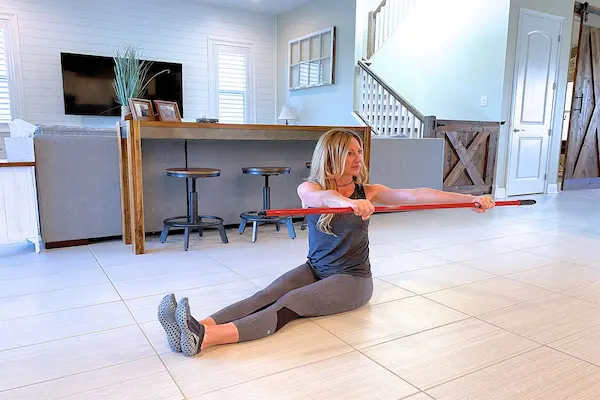
Staying active does not have to depend on a gym membership, a full rack of weights, or complicated machines.
When you start exploring workout ways using household items, everyday objects turn into surprisingly effective tools for movement and strength.
This approach feels playful and flexible, which is perfect for an adult who prefers creative solutions and does not own workout equipment.
Instead of feeling blocked by what you do not have, you begin to notice how much you can already do with what surrounds you.
Chairs, water bottle weights, backpacks, towels, and even walls and stairs can support simple routines that fit into real life.
The goal of this article is to show how common household objects can help you build safe, easy to apply workouts that feel achievable rather than overwhelming.
Throughout the text, you will see concrete lists of items, clear exercise examples, and important safety notes so you can move with confidence.
Why working out with household items is surprisingly effective
Muscles respond to tension, resistance, and movement patterns, not to brand names printed on shiny equipment.
Whenever you lift, push, pull, or hold an object against gravity, your body interprets that load as real work and adapts over time.
Because of this, workout ways using household items can strengthen your body even though the tools look simple or improvised.
Filled bottles, heavy books, bags of rice, and backpacks can all stand in for classic weights as long as you handle them with care.
Bodyweight movements like squats, pushes, and planks already challenge you, and everyday objects mainly help adjust the intensity and add variety.
Creative exercises with familiar items also feel less intimidating, which makes it easier to start and to repeat your routine regularly.
Consistency matters more than perfection, and a small, playful home workout done often beats a complicated plan that never really happens.
Safety basics before you start moving
Even when a session looks simple, your body still deserves respect, attention, and honest listening.
If you have medical conditions, feel unwell, or have a history of injuries, a conversation with a doctor or qualified health professional is strongly recommended before changing your activity level.
During any chair workout, or whenever you hold water bottle weights or heavier objects, control and stability are more important than speed.
Sharp pain, strong dizziness, or chest discomfort are clear signals to stop immediately rather than trying to push through.
Your workout area should be free of clutter, loose cables, slippery rugs, and anything that could trip you while you move.
Any chair used for support must be stable, placed on a non slippery surface, and ideally positioned against a wall to reduce tipping risk.
Containers such as bottles, jugs, and detergent boxes need to close securely so nothing leaks or flies out during an exercise.
Breathing steadily throughout each repetition helps you stay calmer and protects against holding your breath in a stressful way.
Essential household items you can turn into workout tools
Before building routines, it helps to see how many useful tools already live in your home.
A small collection of familiar objects can cover full body strength, balance, and light cardio without special equipment.
- A sturdy chair without wheels for chair workout moves, step ups, dips, and seated core exercises.
- Different sizes of water bottle weights, filled more or less depending on how much resistance you want.
- A backpack or tote bag that can be packed with books, canned food, or rice bags for adjustable loading.
- Large and small towels for sliding movements, stretches, and gentle grip based pulls and rows.
- Soft cushions or pillows to protect knees and to create unstable surfaces for balance challenges.
- A broomstick or mop handle to guide posture, alignment, and mobility drills.
- Laundry detergent jugs or milk containers with handles for heavier lifts when tightly closed.
- Stairs, low steps, or a solid doorstep for simple cardio and leg strengthening work.
Not every object will feel comfortable or safe for you, so you can choose the options that fit your home and your confidence level.
Chair workout essentials for a safe setup
A chair can almost become a compact home gym when you prepare and use it wisely.
- Pick a chair with a flat seat, firm legs, and no wheels so it cannot roll away from you.
- Place the chair on a non slippery surface such as a rug, mat, or carpeted area whenever possible.
- Position the back of the chair against a wall if you expect to lean or step onto it.
- Test the stability by gently pressing down and rocking it before you start your chair workout.
- Keep pets, toys, and small objects away from the chair so your feet land on clear ground.
Once these basics are in place, you can trust the chair more and focus attention on your technique and breathing.
Water bottle weights and other makeshift dumbbells
Water bottle weights are one of the easiest and most adjustable options for home strength training.
Different bottle sizes allow fine tuning of difficulty, because filling them halfway or fully changes the resistance quickly.
- Small bottles work well for shoulder raises, biceps curls, and light overhead presses.
- Larger bottles or jugs fit better for rows, deadlift style hinges, and goblet squat variations.
- Backpacks filled with books or food packages can replace a single heavier dumbbell for larger movements.
- Detergent containers with handles provide a comfortable grip for one arm swings and carries when closed properly.
Starting lighter than you think you need is usually smarter, because you can always add water or books once you feel stable and in control.
Towels, cushions, and the floor as exercise equipment
Soft and flexible items create options for both gentle support and extra challenge.
Thick towels can protect knees, elbows, and hips during floor work so you feel less pressure and discomfort.
On smooth floors, small towels under your feet or hands allow sliding movements that strengthen your core and legs in a new way.
Cushions or folded pillows can turn simple standing exercises into balance training by making the surface slightly unstable.
A comfortable mat or rug sets the stage for core work, bridges, side planks, and mobility drills that require more contact with the floor.
Upper body workout ways using household items
Upper body sessions can feel satisfying even with no equipment or with just a handful of light objects.
By combining pushing, pulling, and holding positions, you train chest, shoulders, arms, and upper back in a balanced way.
Chair workout moves for arms, chest, and shoulders
A stable chair offers several creative exercises that target the upper body while also involving your core.
- Chair triceps dips
Place your hands on the front edge of the seat with fingers facing forward and feet planted on the floor.
Slide your hips just off the seat, bend your elbows slowly to lower your body, then press back up without locking the joints.
Move your feet closer to make the exercise easier and farther away to increase difficulty.
- Incline push ups on the chair
Set your hands on the seat, walk your feet back until your body forms a straight line from shoulders to heels, and brace your core.
Lower your chest toward the edge of the seat while keeping your elbows slightly tucked, then push the chair away to return to the starting position.
Reducing the angle by using a lower surface, such as a sturdy coffee table, gradually makes the move more challenging.
- Incline shoulder taps
Hold the incline push up position, widen your feet for added balance, and lift one hand to tap the opposite shoulder.
Alternate sides while trying to keep your hips steady, which turns this into a powerful core and shoulder stability drill.
Water bottle weights routine for arms and shoulders
Light water bottle weights offer a joint friendly way to strengthen arms and shoulders through controlled, deliberate movement.
- Front raises
Stand tall with a bottle in each hand, arms down and palms facing your thighs, then lift both bottles in front of you to shoulder height and lower them slowly.
- Lateral raises
Hold the bottles by your sides with a small bend in each elbow, raise them out to the sides until your hands reach shoulder level, pause briefly, and return with control.
- Biceps curls
Keep your elbows close to your ribs, palms facing forward, curl the bottles toward your shoulders, squeeze at the top, and then descend smoothly.
- Overhead presses
Begin with both bottles at shoulder height, press them overhead without shrugging your shoulders, and lower back to the starting position while engaging your core.
Completing two or three sets of eight to twelve repetitions for each movement can create a simple, effective upper body block.
Back and posture friendly creative exercises
A healthy back depends on strong muscles between the shoulder blades and around the spine.
Household items make it easier to feel those areas switch on without using big machines.
- Broomstick pull apart for upper back activation and chest opening.
- Towel rows using a secured towel looped around a door handle for pulling strength.
- Back extension or “superman” holds on the floor to gently train spinal extensors.
Slow, controlled tempo matters more than dramatic range, especially when you are reconnecting with posture muscles after long periods of sitting.
Lower body workout ways using household items
Legs and glutes respond extremely well to basic patterns such as squats, lunges, hinges, and step ups.
Many of these patterns become more accessible and more interesting when combined with simple support from household objects.
Chair workout ideas for legs and glutes
The humble chair supports beginners while still offering progressions for stronger legs over time.
- Sit to stand squats
Start seated near the front of the chair with your feet under your knees, chest open, and arms reaching slightly forward.
Lean gently forward and stand up using your legs instead of pushing with your hands, then slowly lower back down to the seat.
Increase difficulty by lightly tapping the seat instead of fully sitting or by holding water bottle weights at chest level.
- Chair step ups
Place one foot firmly on the seat, push through that heel to lift your body, bring the other foot up, and step back down with control.
Switch the leading leg after a set so both sides share the work equally.
- Supported split squats
Stand a step in front of the chair, rest your back foot lightly on the seat, and bend your front knee to lower your hips.
Press through the front heel to stand back up, stopping before any knee discomfort appears.
Stairs, walls, and bags for stronger legs
When you want to add variety, you can look beyond the chair to walls, steps, and loaded bags.
- Wall sits with your back against the wall and knees bent around ninety degrees to build endurance in thighs and glutes.
- Step marches using a single stair to alternate stepping up and down for low impact cardio work.
- Backpack deadlifts where you hinge at the hips, pick up a loaded bag with a long spine, and stand tall again.
Keeping movements smooth instead of jerky protects your joints and helps build confidence in your legs.
Core and balance with no equipment or light props
Core strength and balance make every other movement feel more secure and coordinated.
Fortunately, these qualities can be trained effectively even when you rely mainly on bodyweight and a few simple household objects.
Simple core moves using a chair
A sturdy chair can support accessible core exercises that do not require getting up and down from the floor repeatedly.
- Seated knee lifts
Sit tall at the front edge of the chair, hold the sides lightly, lift one knee toward your chest, and lower it slowly.
Alternate sides or raise both knees together for more intensity while keeping your back long.
- Incline planks
Place your hands on the seat, walk your feet back, and hold your body in a straight line while breathing steadily.
Choose a shorter hold time at first and build up gradually as your core adapts.
- Chair mountain climbers
From the incline plank position, gently drive one knee toward your chest, then switch to the other side in a controlled rhythm.
Floor based core training using everyday objects
When getting onto the floor feels comfortable, you unlock many more creative exercises that use gravity in your favor.
- Glute bridges with a backpack or bottle resting on your hips to add resistance.
- Dead bug variations holding a water bottle between your hands while your legs move slowly.
- Towel slides under your heels to lengthen and curl your legs while your hips stay lifted.
Remember to keep your neck relaxed and your breathing natural instead of bracing too hard through your throat.
Balance drills with safe household support
Improved balance helps with daily tasks like carrying bags, climbing stairs, and walking on uneven ground.
Gentle drills using chairs, walls, and cushions can train this skill without asking for extreme moves.
- Stand behind a chair, lightly hold the backrest, and lift one foot off the floor for several breaths.
- Reduce support by using only one finger on the chair, then none at all when you feel secure.
- Place a cushion or folded towel under your feet to create a soft, unstable surface for additional challenge.
- Walk heel to toe along a straight line on the floor, such as the edge of a rug, while focusing on a spot ahead of you.
Short, frequent balance sessions often work better than long, occasional ones because your nervous system appreciates regular practice.
Example full body routines using household objects
Putting individual exercises together into a simple structure makes your workout easier to follow and more likely to happen.
The following routines show how workout ways using household items can fill fifteen to thirty minutes with purposeful movement.
Quick 15 minute beginner routine
This routine focuses on smooth, approachable movements and longer rests so you can learn good technique.
- Warm up for three minutes
March in place, roll your shoulders, and circle your arms while taking deep, comfortable breaths.
- Lower body block
Perform sit to stand squats from a chair for ten repetitions, then hold a wall sit for twenty to thirty seconds.
- Upper body block
Do eight to ten incline push ups on the chair, followed by ten light water bottle weights curls.
- Core block
Finish a round with ten seated knee lifts and a twenty second incline plank hold.
- Repeat pattern
Cycle through the lower body, upper body, and core blocks two or three times, resting thirty to sixty seconds when needed.
- Cool down
End with gentle stretches for legs, chest, and shoulders while your breathing slows back down.
Playful 25 minute circuit with creative exercises
Once you feel comfortable with the basics, a playful circuit keeps your attention and raises your heart rate a bit more.
- Circuit exercise one
Perform twelve backpack deadlifts using a moderate load that still allows you to move smoothly.
- Circuit exercise two
Complete ten to twelve water bottle shoulder presses while keeping your ribs down and your core active.
- Circuit exercise three
Do ten step ups per leg on a stable chair or low step with light hand support if necessary.
- Circuit exercise four
Hold a thirty second incline plank, then add gentle mountain climber steps if you feel stable.
- Circuit exercise five
March on the spot or walk up and down a stair for forty to sixty seconds for low impact cardio.
Repeat the full circuit two or three times, taking breaks between stations as your body requires.
Motivation tips for sticking to household item workouts
Consistency often depends more on environment and mindset than on complex program details.
A few small strategies can make your creative exercises feel like a natural part of your day instead of a chore.
- Leave your main items, such as water bottle weights and a chair, in a visible spot as a gentle reminder.
- Schedule two or three specific days for short sessions rather than waiting for the perfect moment.
- Pair your routine with something enjoyable, like a favorite playlist or a podcast you listen to only while training.
- Track small wins, such as one extra repetition, a longer hold time, or an easier breathing pattern during effort.
- Celebrate the feeling of keeping a promise to yourself, even when your session stays short and simple.
Over time, these workout ways using household items can become a comforting ritual that supports both body and mood.
Important disclaimer and independence notice
This article offers general information only and does not replace personal medical advice, physical therapy, or individual coaching.
If you experience pain, unusual symptoms, or concerns during any chair workout or when using household objects as weights, you should pause and consult a qualified professional.
Adjust every exercise to your current level, skip movements that feel unsafe, and progress gradually rather than rushing into harder variations.
The content here is independent and has no affiliation, sponsorship, endorsement, or control by any institutions, platforms, brands, or third parties that may be mentioned as examples.
Names of objects or products are used only in a generic, descriptive way, and there is no commercial or official connection to them.
Your body, your space, and your pace always come first, and creative home workouts should support your well being rather than stress it.