
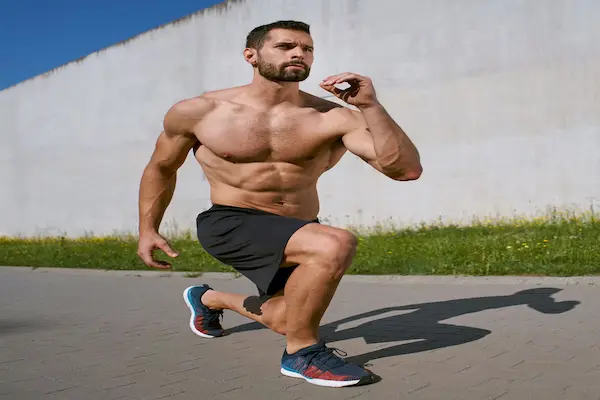
Strength training does not have to start with heavy weights, crowded gyms, or complicated machines, because your own body already provides an excellent resistance tool that can be used almost anywhere, making workout ways using bodyweight only one of the most flexible and empowering options for beginners.
Calisthenics basics focus on learning how to push, pull, squat, hinge, and stabilize your core using nothing more than gravity and smart positioning, which means that a living room, hallway, or quiet corner of a bedroom can quickly transform into a simple strength at home space without buying any equipment at all.
For someone curious about calisthenics or simple strength routines but unsure where to begin, this approach has another big advantage: bodyweight-only exercises can be scaled up or down by changing angles, ranges of motion, and tempo, so the same movement pattern can match many different strength levels and grow with you over time.
This guide will walk through core calisthenics basics, introduce clear progressions for major muscle groups, provide a sample full-body routine built from simple sets you can follow at home, and outline practical advice on rest, recovery, and consistency so that your no equipment training becomes a sustainable habit rather than a short experiment.
Safety First: Preparing for Bodyweight Training at Home

Checks to Make Before Starting
- If any medical conditions, previous injuries, or joint issues are present, a quick conversation with a doctor or other qualified professional is wise before launching into new workout ways using bodyweight only, since they can help confirm which movements are appropriate and which ones should be avoided for now.
- Clearing enough floor space to lie down fully and step around without bumping into furniture helps reduce the risk of trips or falls, and it keeps your focus on technique instead of worrying about nearby obstacles.
- Choosing shoes with good grip or training barefoot on a non-slip surface keeps feet stable during squats, lunges, and core work, while loose, comfortable clothing avoids restriction when arms and legs move through a full range.
- Agreeing with yourself that pain is a signal to stop rather than something to push through sets the right mindset from the beginning, because strength at home should support long-term health, not create new issues.
Simple Warm-Up Ideas to Protect Joints and Muscles
Warming up fills an important role in any gentle routine or more challenging calisthenics basics, since cold muscles and stiff joints generally do not appreciate sudden, intense movements.
- Joint circles (2–3 minutes)
- Perform slow circles with your neck, shoulders, elbows, wrists, hips, knees, and ankles, keeping movements small and pain free, which helps wake up connective tissues without stress.
- Stand tall during these circles, imagining a long spine, and keep breathing relaxed rather than holding the breath.
- Dynamic leg and arm swings (2 minutes)
- Gently swing one leg forward and back while holding a chair or wall for balance, then swap sides, limiting height so that hips feel comfortable and controlled.
- Combine this with light arm swings across the chest and overhead to prepare the shoulders for push patterns such as incline push-ups.
- Easy marching or step-touches (1–2 minutes)
- March in place with soft knees and natural arm movement, gradually increasing rhythm until breathing becomes a little deeper but you can still talk easily.
- Alternate marching with side step-touches to gently elevate heart rate and increase warmth in the legs.
After five to seven minutes of this kind of warm-up, your body will usually feel more ready for the technique-focused work that follows.
Calisthenics Basics: Understanding Bodyweight Movement Patterns
The Main Patterns Behind Workout Ways Using Bodyweight Only
Most effective workout ways using bodyweight only revolve around a small set of fundamental movement patterns, which can be adjusted and combined into simple sets at home to train your entire body.
- Push patterns: Actions such as push-ups or wall presses train chest, shoulders, and triceps and involve pushing the ground or a surface away from you.
- Pull patterns: Movements like rows or inverted pulls work the upper back and biceps and involve drawing your body toward a surface or bringing an object toward you using pulling muscles.
- Squat patterns: Sitting and standing actions, often practiced as bodyweight squats, strengthen thighs and glutes and apply directly to standing up, climbing stairs, and similar daily tasks.
- Hinge patterns: Hip-dominant movements such as hip hinges and glute bridges teach you to bend at the hips while protecting the back, important for lifting objects and moving smoothly.
- Core and anti-rotation patterns: Planks, dead-bugs, and similar simple sets help the body resist unwanted movement, improving posture and stability in almost everything you do.
Principles of Progression Without Equipment
Progress in calisthenics basics does not require adding external weight; instead, difficulty can be adjusted through thoughtful changes to positioning, volume, and tempo.
- Changing angles: Raising hands on a wall makes push-ups easier; lowering the hands to a table or floor makes them harder, and the same logic applies to many bodyweight movements.
- Adjusting range of motion: Shorter, partial squats provide an entry point, while deeper squats challenge muscles more, as long as knees and hips feel comfortable.
- Manipulating tempo: Slowing down both the lowering and lifting phases increases time under tension and makes even very simple sets more demanding.
- Increasing repetitions or sets gradually: Adding one or two repetitions at a time or introducing a third set after many weeks can be enough progression for a beginner, without any need for sudden leaps in volume.
Push Progressions: Building Upper-Body Strength at Home
Wall Push-Up: The First Step
- Starting position: Stand an arm’s length away from a wall, place your palms flat on it at chest height and a little wider than shoulder width, and step your feet back slightly so your body forms a gentle angle.
- Execution: Bend your elbows and bring your chest toward the wall in a slow, controlled motion, pause briefly close to the wall, then push the wall away to return to the starting position, exhaling as you press.
- Cues:
- Keep your body in a straight line from head to heels, avoiding sagging hips.
- Allow elbows to track diagonally backward rather than flaring straight out to the sides.
- Beginner goal: Two simple sets of 8–10 repetitions, resting 60–90 seconds between sets.
Incline Push-Up: Progressing Toward the Floor
- Starting position: Place hands on a stable elevated surface such as a countertop, sturdy table, or couch edge, walk feet backward until your body forms a straight line, and brace your midsection gently.
- Execution: Lower your chest toward the surface by bending elbows, pause close to the edge, then press back up with control, avoiding bouncing at the bottom.
- Adjustments:
- To make the movement easier, choose a higher surface; to make it harder, use a lower one.
- Keep repetitions slow and deliberate to focus on strength at home rather than speed.
- Simple set guideline: Two or three sets of 6–8 repetitions, depending on your ability to maintain form.
Floor Push-Up: Classic Bodyweight Strength Builder
- Kneeling variation: Place hands on the floor slightly wider than shoulders, knees on the ground, and form a straight line from head to knees, then lower and lift as in other push-up variations.
- Full variation: Extend legs fully with toes on the floor and body in a straight plank before lowering into each repetition.
- Technique notes:
- Keep your gaze slightly ahead of your hands rather than directly down to protect the neck.
- Stop the set when form breaks down, even if you have not reached a specific repetition target yet.
- Simple progression: Alternate between incline push-ups and kneeling push-ups until full push-ups feel manageable for short sets.
Squat and Lower-Body Progressions: Building Leg Strength Without Equipment
Chair Squat: Controlled Sit-and-Stand
- Starting position: Stand in front of a sturdy chair with your back facing it, feet about hip-width apart, and toes slightly turned out; keep your chest gently lifted.
- Execution: Push your hips backward as if starting to sit, bend your knees, and lower until your hips touch or hover just above the chair, then press through your heels to stand up again.
- Tips:
- Allow your arms to extend forward for balance if needed.
- Focus on smooth control rather than dropping quickly and collapsing onto the seat.
- Simple sets: Two simple sets of 8–10 repetitions, resting as long as necessary between them.
Bodyweight Squat: Moving Away From the Chair
- Starting position: Stand upright with the same stance as for chair squats but in open space, imagining that a chair still sits behind you even though you no longer touch it.
- Execution: Bend knees and hips simultaneously, lowering yourself until thighs approach parallel with the floor—or to a range that feels safe—then stand back up, squeezing glutes gently at the top.
- Common mistakes:
- Letting knees cave in toward each other instead of tracking over the middle of each foot.
- Dropping the head and rounding the upper back excessively, which can stress the spine.
- Progression idea: Increase depth gradually over weeks rather than forcing a deep squat on day one.
Split Squat: Introducing Single-Leg Emphasis
- Starting position: Place one foot forward and the other back so you are in a staggered stance, with feet still hip-width apart sideways for balance; use a wall or chair for light support if needed.
- Execution: Lower your back knee toward the floor while bending the front knee, keeping most of your weight on the front leg, then push through the front heel to rise again.
- Safety notes:
- Stay within a shallow range at first and avoid letting the front knee travel far beyond the toes.
- Stop instantly if knees feel sharp pain and consider returning to regular squats for a while.
- Repetitions: Start with 6–8 repetitions per leg and build slowly only if the movement feels strong and stable.
Hinge and Posterior Chain Progressions: Back-Friendly Strength at Home
Hip Hinge Pattern: Learning to Bend Safely
- Starting position: Stand with feet hip-width apart, soften your knees slightly, and place your hands on your hips or across your chest.
- Execution: Push your hips backward as if closing a drawer behind you with your glutes, maintain a long spine, and allow your upper body to tilt forward, then drive hips forward to stand tall again.
- Why it matters:
- This pattern teaches you to use hips instead of rounding your back when reaching toward the floor, important for safe lifting in daily life.
- Usage: Practice 8–12 repetitions slowly as part of your warm-up or main strength work.
Glute Bridge Progressions
- Basic glute bridge:
- Lie on your back with knees bent, feet flat on the floor, and arms by your sides; press through your heels, lift your hips, and create a straight line from shoulders to knees, then lower with control.
- Perform 10–15 repetitions, focusing on squeezing the glutes rather than arching the lower back excessively.
- Bridge with pause:
- Hold the top position for 2–3 seconds before lowering to increase time under tension.
- Single-leg bridge (advanced step):
- Lift one foot off the floor and perform bridges using one leg at a time, but only after mastering the basic version without any discomfort.
Core and Stability Progressions: Simple Sets for a Strong Midsection
Dead Bug: Controlled Core Engagement
- Starting position: Lie on your back, raise your arms toward the ceiling, and lift your legs so that hips and knees are at right angles.
- Execution: Slowly extend one arm behind your head while extending the opposite leg toward the floor, pause briefly, then return to the starting position and switch sides, keeping your lower back gently near the floor.
- Key points:
- Move slowly enough to maintain balance and avoid arching the back.
- Shorten the range if control is difficult; even partial extensions can be effective.
Plank Progressions Without Equipment
- Incline plank:
- Place your forearms or hands on a stable surface such as a table or couch, walk your feet back until your body forms a straight line, and hold while breathing steadily.
- Begin with 10–15 second holds, repeating two or three times with rest between sets.
- Kneeling floor plank:
- Move to the floor on forearms and knees, form a straight line from head to knees, and hold for short intervals, gradually increasing duration as strength improves.
- Full plank:
- Place forearms or hands on the floor, extend legs fully, and maintain a strong line from head to heels while focusing on firm core engagement and steady breathing.
Side Plank (Optional, for Later Stages)
- Once basic plank strength is built, side planks can be introduced by lying on one side, propping up on a forearm, and lifting hips off the floor; the kneeling variation is a useful entry step before trying full versions.
- Hold positions briefly at first and stop well before form deteriorates, because quality matters more than duration in these simple sets.
Sample Full-Body Routine Using Workout Ways With Bodyweight Only
Beginner Full-Body Strength at Home Routine (3 Days Per Week)
The following sample routine uses only the calisthenics basics described above and can be completed in roughly 25–35 minutes, depending on rest periods and how many simple sets you choose.
- Warm-up (5–7 minutes)
- Joint circles, dynamic leg and arm swings, and easy marching as outlined in the warm-up section.
- Main strength circuit (two or three rounds)
- Wall or incline push-ups – 8–10 repetitions.
- Chair squats – 10–12 repetitions.
- Glute bridges – 12–15 repetitions.
- Dead bug – 6–8 repetitions per side.
- Standing calf raises – 10–15 repetitions.
- Rest 60–90 seconds after the last exercise, then repeat the circuit.
- Optional focused core finisher (3–5 minutes)
- Incline plank holds – 3 sets of 10–20 seconds, with rests in between.
- Cool-down (5 minutes)
- Gentle stretching for chest, shoulders, hips, thighs, and calves, holding each stretch for about 15–30 seconds.
Training this way three non-consecutive days each week, for example Monday, Wednesday, and Friday, provides a solid foundation for building general strength at home using no equipment.
Rest, Recovery, and Weekly Structure
How Often to Train With Workout Ways Using Bodyweight Only
- Total-body routines that involve push, pull, squat, hinge, and core patterns typically work well two to three times per week for beginners, with at least one rest or light-movement day between workouts.
- On rest days, walking, gentle stretching, or light mobility practice can keep you moving without overloading muscles, joints, or connective tissues.
- Once calisthenics basics feel easier and recovery is comfortable, a split plan that separates upper and lower body across different days can be introduced, although full-body simple sets remain perfectly effective for many months.
Understanding Recovery Signals
- Mild soreness in muscles for a day or two after training is common, particularly when starting new bodyweight-only workout ways, yet this sensation should not be overwhelming or severely limit daily function.
- Persistent pain in joints, severe discomfort, or rapidly increasing soreness suggests that volume or intensity may be too high and should be reduced, with rest days extended as needed.
- Sleep quality, general energy, and mood often provide useful feedback; consistent training should eventually support these areas rather than consistently making them worse.
Consistency Tips for Bodyweight Strength at Home
Making Calisthenics Basics a Habit
- Attaching your workout to an existing daily habit—such as doing it after waking, right after work, or following a mid-morning snack—helps transform training from a decision into a routine part of the day.
- Keeping a visible simple sets chart on a wall or in a notebook near your training area reminds you of the plan and reduces time spent deciding which exercises to perform.
- Tracking progress in a basic log, noting repetitions, sets, and how each session felt, makes it easier to see patterns and appreciate improvements that might otherwise go unnoticed.
Staying Technique-Focused and Empowered
- Viewing each repetition as practice, not just as another number to reach, keeps attention on quality of movement and reinforces proper mechanics for long-term strength gains.
- Comparing only to your own previous sessions rather than to others’ abilities helps maintain motivation and reduces the chances of rushing into variations that are not yet appropriate.
- Revisiting key form cues regularly—neutral spine, controlled tempo, full but comfortable range of motion—ensures that progress does not come at the cost of safety.
Adapting Workout Ways Using Bodyweight Only to Your Situation
Modifications for Joint Sensitivity or Limited Mobility
- Using higher inclines for push-ups, shallower ranges for squats, or more frequent rests can make calisthenics basics accessible even when joints are sensitive, as long as a professional has confirmed that movement is safe for you.
- Performing certain exercises seated or near a wall provides extra support, turning no equipment training into something that feels secure rather than intimidating.
- Shortening sessions and focusing on a few key simple sets can be more productive than trying to copy a full routine on days when energy or comfort is reduced.
When Professional Guidance Is Especially Valuable
- Existing medical conditions, recent surgeries, or chronic pain are strong reasons to check with a doctor or physical therapist before modifying intensity or adding challenging variations like single-leg work or full planks.
- Sudden pain during or after workouts, particularly in the spine, hips, knees, or shoulders, deserves professional attention before continuing to train.
- Uncertainty about whether a specific movement is suitable for your body type, injury history, or health status can often be resolved quickly by consulting a qualified trainer or therapist familiar with bodyweight strength at home.
Closing Thoughts: Building Strength With the Body You Already Have
Training with workout ways using bodyweight only turns your own body into a practical, always-available tool for building strength, balance, and confidence, regardless of whether you have access to a gym or expensive equipment.
Calisthenics basics, practiced with respect for form, gradual progress, and a safety-first mindset, can help you move more powerfully in everyday life, from climbing stairs and lifting objects to maintaining better posture at a desk or while walking.
By combining clear progressions for push, squat, hinge, and core patterns with a manageable full-body routine, sensible rest days, and consistent attention to technique, you can develop meaningful strength at home using nothing more than simple sets and your own determination to improve over time.
As these habits take root, bodyweight training stops feeling like a temporary substitute and becomes a primary way to stay strong, capable, and in control of your fitness journey, even when space, time, or equipment are limited.