
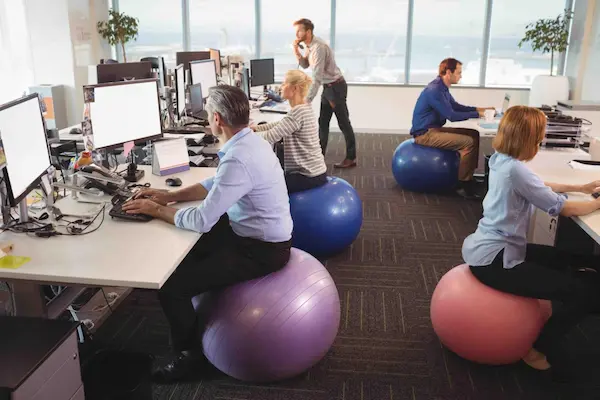
Plenty of employees would like to move more during the workday, yet many hesitate because they do not want to attract attention, look unprofessional, or seem as if they are not focused on their tasks, and this tension often leads to quietly accepting a sedentary routine that does not feel good by the end of the week.
When you spend long hours at a desk, small aches in the neck, shoulders, lower back, and hips can slowly become “normal,” even though those signals are your body’s way of asking for office stretches, position changes, and brief work breaks to reset posture and circulation.
Rather than imagining fitness as something that must happen in a gym or require sports clothes, it can be much more realistic to adopt office friendly fitness habits that consist of discreet desk exercises, subtle standing movements, quiet walking choices, and short active pauses that blend smoothly into a corporate environment.
All of the ideas below are designed for people who want to respect workplace culture and norms, stay productive, and still reduce the impact of a sedentary lifestyle, using movements that look natural and coordinated with existing routines instead of dramatic or distracting.
The suggestions are independent, not sponsored or controlled by any company or corporate wellness provider, and they are meant to give you neutral, practical options that you can adapt to your role, office layout, and comfort level without needing to ask for special equipment or permission in most situations.
What Office Friendly Fitness Habits Actually Are
Office friendly fitness habits are small, low-profile behaviors that help you move more, sit less, and feel better in your body while still looking appropriate for a professional setting and remaining fully engaged with your work responsibilities.
These habits usually focus on simple desk exercises you can perform while seated, subtle office stretches you can do beside your chair, short standing sequences that fit into work breaks, and walking choices that make use of hallways, stairwells, and elevators in a smart way.
Instead of large, intense movements that look like a workout session, these actions are designed to appear like natural posture adjustments, brief resets, or short trips around the workspace, so that you can maintain corporate credibility and comfort while still caring for your health.
- Movements that can be done in work clothes without sweat or heavy breathing.
- Exercises that require little or no equipment, using your chair, desk, or bodyweight instead.
- Habits that slip into existing work breaks, transitions, or short pauses between tasks.
- Activities that respect shared office space and do not disturb colleagues.
By defining office friendly fitness habits this way, it becomes easier to see where they might fit into your day without feeling like you are doing something unusual or disruptive.
Why Office Friendly Fitness Habits Matter in a Sedentary Workplace
The Physical Cost of Sitting Still All Day
Modern office work often involves long stretches of screen time, back-to-back meetings, and extended focus periods, and when your body remains seated through all of that, it can quietly accumulate tension and fatigue even when your mind stays active.
Spending much of the day in a static posture contributes to several common issues that many people assume are just part of aging or working, when in reality they are often connected to a sedentary lifestyle.
- Stiff hips and lower back discomfort that appear after prolonged sitting and fade only slowly when you finally stand.
- Tight shoulders, neck strain, or tension headaches linked to leaning forward toward screens and keyboards.
- Heavy or restless legs caused by reduced circulation, especially when you rarely stand up more than a few times per hour.
- Lower energy and reduced focus in the afternoon when the body has not had any meaningful office movement or active breaks.
Gentle desk exercises and office stretches, practiced consistently, can help interrupt these patterns without requiring you to change jobs or radically reorganize your schedule.
Benefits That Go Beyond Physical Comfort
Although reduced aches and improved posture are obvious advantages, office friendly fitness habits support your workday in other ways that are less visible but equally important for long-term wellbeing and performance.
- Short work breaks that include movement refresh mental clarity, making it easier to return to complex tasks with renewed concentration.
- Standing up more often can improve alertness and reduce the sleepy feeling that sometimes appears after long meetings or heavy meals.
- Regular office stretches can signal to your nervous system that you are not stuck or trapped, which may ease stress and increase resilience.
- Developing small, reliable habits around movement can boost confidence in your ability to care for your health even on busy days.
When seen this way, office friendly fitness habits are not a luxury or a distraction; they are another form of professional self-management that helps you bring a sharper, more comfortable version of yourself to your work.
Principles for Discreet, Workplace-Appropriate Movement
Small Range of Motion and Controlled Pace
Movements that are modest in size and executed with calm, controlled pacing naturally appear more professional than big, fast, or dramatic gestures, which makes them ideal for an environment where you want to stay unnoticed.
- Choose desk exercises where arms and legs move within a compact range rather than swinging widely.
- Favor slow, deliberate motions over rapid repetitions so your breathing stays quiet and your body remains composed.
- Focus on form and muscle activation instead of intensity or speed, treating each movement like a careful adjustment.
By keeping movements small and steady, you make your office friendly fitness habits look like natural posture corrections rather than a full workout.
Neutral Visual Appearance and Minimal Noise
Respecting colleagues’ focus and company culture means avoiding movements that cause thumping noises, dramatic facial expressions, or obvious panting, especially in open-plan offices where sound travels quickly.
- Use your own bodyweight rather than slamming drawers, bending metal chairs, or dragging furniture.
- Stay aware of your shoes on hard floors during walking breaks to avoid heavy footsteps that might distract others.
- Keep facial expressions relaxed and avoid strong grimaces or exaggerated effort that could draw attention.
These details ensure that your office stretches and work breaks look like a natural part of your day rather than an interruption to your team’s workflow.
Alignment with Work Rhythm and Expectations
Coordinating movement with your schedule makes fitness habits easier to maintain and less likely to conflict with meetings, deadlines, or team norms, which in turn keeps them sustainable and acceptable in a corporate context.
- Identify quieter moments in your day, such as before most colleagues arrive, just after lunch, or right before you leave, and place slightly longer movement breaks there.
- Use truly brief gaps between tasks for micro break desk exercises lasting one or two minutes.
- Avoid obvious movement during sensitive calls, presentations, or client-facing video meetings, choosing stillness and good posture instead.
When office friendly fitness habits respect the rhythm of work, colleagues tend to see them as part of your personal productivity style rather than as a distraction.
Discreet Desk Exercises for Seated Work
Subtle Posture and Core Activation While You Sit
Some of the most effective office friendly fitness habits happen completely seated, using posture shifts and gentle muscle engagement that nobody around you needs to notice.
- Seated posture reset
- Sit toward the front half of your chair, plant both feet flat on the floor, and let your hands rest lightly on your thighs.
- Imagine lengthening your spine up toward the ceiling, gently drawing your shoulder blades down and back without forcing a rigid position.
- Hold this posture for five to ten slow breaths while lightly engaging your core muscles, then relax and repeat later in the day.
- Quiet core brace
- Maintain a neutral upright posture, then gently tighten your abdominal muscles as if bracing for a light tap, keeping your breathing smooth and steady.
- Hold for a count of five to ten, release completely, and repeat several times, making sure no visible strain appears on your face.
- Pelvic tilt micro-movement
- While seated, tilt your pelvis slightly forward to increase the curve in your lower back, then tilt it slightly back to flatten that curve, keeping the movement slow and small.
- Cycle through this motion ten to twelve times to relieve stiffness in the lower back after long computer sessions.
These seated desk exercises can be performed during emails, reading, or quiet work, and they are excellent starting points if you want office friendly fitness habits that are almost invisible.
Leg and Ankle Movements Under the Desk
Leg circulation and joint comfort benefit from gentle, low-profile movements, and many of them can be done without anyone seeing what you are doing below the desktop surface.
- Under-the-desk heel raises
- Keep your toes on the floor and slowly lift your heels, squeezing your calf muscles at the top, then lower them back down with control.
- Repeat for ten to twenty repetitions per set, pausing between sets to keep things comfortable.
- Seated leg extensions
- Lift one foot a small distance off the floor and gently extend the knee until your leg straightens or nearly straightens, then lower it again.
- Alternate legs, performing eight to ten repetitions on each side, keeping the movement slow so your chair does not rock dramatically.
- Ankle circles and pumps
- With one foot lifted slightly, draw slow circles with your toes, rotating the ankle several times clockwise and then counterclockwise.
- Point and flex the foot gently for several repetitions, then change legs to keep both ankles mobile during long seated periods.
Leg-focused desk exercises like these are especially useful on days when you cannot stand often but still want to avoid a completely sedentary lifestyle at work.
Subtle Upper-Body Desk Exercises
The upper body holds a tremendous amount of tension during desk work, so incorporating small, office friendly fitness habits for shoulders, neck, and wrists can make a noticeable difference by the end of the day.
- Micro shoulder rolls
- Lift your shoulders slightly toward your ears, roll them backward in a small circle, and gently let them drop down again.
- Repeat ten times in each direction, keeping the motion compact and smooth to avoid attracting attention.
- Scapular squeezes
- Sit upright, then gently draw your shoulder blades toward each other, as if you are pinching a pencil between them, while keeping your shoulders relaxed and away from your ears.
- Hold for three to five seconds, release, and repeat ten times.
- Desk edge wrist stretch
- Place your palms on the edge of your desk with fingers pointing toward you and gently lean back until you feel a mild stretch in the wrists and forearms.
- Hold the stretch for several breaths, staying within a comfortable range, then relax and shake out your hands quietly.
Upper-body desk exercises like these blend seamlessly with normal work behaviors and can double as quick office stretches when you feel tightness building.
Standing Ideas That Look Natural in an Office
Professional Standing Positions for Short Work Breaks
Standing more often during the day helps counteract the effects of sitting, yet many people feel self-conscious about simply standing without a clear reason, so it helps to have structured, office friendly fitness habits that look intentional and connected to your tasks.
- Stand when reading printed documents, holding them at a comfortable height near a side table or cabinet.
- Review notes or agendas for the next meeting while standing beside your desk, resting your notebook on a stable surface.
- Take a brief call with headphones while standing near a window, keeping your posture relaxed and your gestures minimal.
By pairing standing with specific activities, you make the habit appear practical and purposeful rather than random.
Small Standing Movements You Can Do Without Drawing Attention
Once you are upright, it becomes easier to slip in tiny movements that keep joints mobile and muscles lightly engaged while still appearing composed and professional.
- Weight shift balance
- Stand with feet hip-width apart and quietly shift your weight from one foot to the other, keeping your torso upright and your movements slow.
- Hold each side for a couple of breaths before transitioning, and continue for one or two minutes.
- Mini calf raises by the desk
- Place one or both hands lightly on your desk for balance, rise onto the balls of your feet, and then lower your heels back to the floor in a controlled way.
- Perform ten to fifteen repetitions, choosing a pace that does not cause your chair or desk to shake.
- Gentle standing hip circles
- Stand tall and draw small circles with your hips as if you are rotating within a narrow cylinder, keeping the motion subtle.
- Complete several circles in one direction, then reverse, keeping your shoulders quiet so the movement appears modest.
These standing movements fit especially well into short work breaks when you want to move but also wish to remain discreet.
Elevator Alternatives and Smart Walking Routes
Using Stairs and Hallways Without Making a Show of It
One of the easiest office friendly fitness habits involves simply choosing routes that encourage more walking, particularly when moving between floors, heading to meetings, or visiting shared spaces such as the kitchen or copy area.
- Take the stairs for one or two floors when schedule and footwear allow, while still using the elevator for longer distances to keep effort comfortable and sweat-free.
- Arrive one or two minutes early for meetings and walk one extra lap around the corridor before entering the room.
- When filling a water bottle or grabbing coffee, walk to a farther station rather than the closest one, adding extra steps without needing extra time on the calendar.
These walking choices are quiet, ordinary actions that still help you stand up more often and chip away at a sedentary lifestyle.
Micro Walking Breaks That Fit Between Tasks
Short walking breaks can be planned around natural pauses in your workflow so that they feel like smooth transitions rather than interruptions.
- After finishing a focused task, stand up, leave your desk, and walk a simple loop around your floor for one to three minutes.
- Between back-to-back meetings, use the time it takes to move rooms as an opportunity to lengthen your route slightly rather than going directly from door to door.
- At lunchtime, spend the first five minutes walking calmly indoors or outdoors before you sit down to eat.
By treating hallways and stairwells as part of your office friendly fitness habits, you turn ordinary movement around the building into planned, beneficial activity.
Coordinating Office Friendly Fitness Habits with Your Work Schedule
Mapping Your Daily Rhythm
Every office day has its own pattern of intense focus, meetings, email bursts, and quieter moments, and understanding your typical rhythm helps you place fitness habits where they support productivity instead of competing with it.
- List your recurring commitments, such as daily stand-up meetings, client calls, or peak email times, and note when your energy tends to be highest and lowest.
- Identify natural windows of two to five minutes that appear between tasks, especially around mid-morning, right after lunch, and mid-afternoon.
- Designate those windows as preferred slots for desk exercises, office stretches, or quick walking breaks.
Once your personal rhythm is mapped, it becomes easier to apply office friendly fitness habits without worrying that you are neglecting your core responsibilities.
Sample Workday Schedule with Built-In Movement
Seeing a sample structure can make it easier to imagine how you might coordinate office movement with tasks without overcomplicating your planning.
- Before official start time: Two to three minutes of standing posture resets and gentle shoulder rolls beside your desk.
- Mid-morning: One minute of under-the-desk leg exercises and a slow walk to refill water.
- Late morning: Short upper-body office stretches after a long call before starting the next task.
- Right after lunch: Five-minute walk through hallways or outside, then a brief seated posture reset.
- Mid-afternoon: Three-minute full-body reset including standing hip circles and calf raises.
- End of day: Two-minute sequence of gentle back extensions, wrist stretches, and a short stroll before leaving.
This pattern provides multiple small opportunities for office friendly fitness habits without requiring any long, formal exercise sessions during work hours.
Lists of Office Friendly Desk Exercises and Stretches
Quick Reference: Top Ten Seated Desk Exercises
Having a concise list you can glance at or remember makes it easier to decide what to do during a brief work break without losing time thinking about options.
- Seated posture reset with core activation.
- Quiet core bracing for short holds.
- Pelvic tilts to ease lower back tension.
- Under-the-desk heel raises for calf activation.
- Seated leg extensions to wake up thighs.
- Ankle circles and pumps for circulation.
- Micro shoulder rolls with relaxed arms.
- Scapular squeezes to counter rounded posture.
- Desk edge wrist stretches for forearms.
- Gentle seated neck tilts and rotations within a comfortable range.
Rotating through this list over the course of a day brings movement to most major areas affected by desk work.
Quick Reference: Standing Office Stretches and Light Moves
Standing movements can be just as structured and office friendly as seated ones, especially when chosen with discretion in mind.
- Calf raises by the desk with light hand support.
- Weight shifting between feet while reading or thinking.
- Small hip circles to ease stiffness from sitting.
- Gentle wall chest stretch if a corner or doorway is available.
- Standing hamstring stretch with heel on a low, stable surface.
- Short standing back extensions with hands on hips.
- Slow side bends while standing upright, keeping movements compact.
These options can be performed near your workstation in a way that still feels appropriate in a corporate wellness context.
Tips to Coordinate Office Friendly Fitness Habits with Team Culture
Staying Respectful of Shared Space
In shared offices, small courtesies go a long way toward making your movement habits acceptable to others, especially when colleagues are focused or under pressure.
- Avoid blocking narrow corridors during walking breaks; keep to one side and move at a comfortable but steady pace.
- Choose quiet shoes where possible to limit loud footsteps in echoing hallways or open spaces.
- Reserve more visible stretches for less crowded times, such as early morning or after most colleagues have left.
By showing awareness of shared space, you reinforce the idea that your office friendly fitness habits are carefully considered, not intrusive.
Using Corporate Wellness Culture as a Support Rather than a Pressure
Many organizations talk about corporate wellness but do not always translate those values into everyday behavior, and that gap can make it difficult to know how visible your fitness habits should be.
- Pay attention to how leaders and managers talk about movement, breaks, and self-care, using their tone as a guide for how open you might be.
- If your workplace offers wellness communications, use those as justification to yourself that standing up more or taking active breaks is aligned with company values.
- Consider suggesting subtle initiatives, such as “stand during one meeting a day,” that match your office friendly approach rather than big, dramatic changes.
Connecting your habits to corporate wellness goals can help you feel grounded in a larger purpose while still keeping your movements discreet.
Simple Tracking Templates to Keep Habits Consistent
Minimalist Paper Tracker You Can Keep in a Notebook
Consistency improves when you can see what you have actually done, and for many employees a simple paper tracker feels more private than digital apps.
- Draw a table with columns labeled Day, Standing Breaks, Desk Exercises, Short Walks, and Notes.
- During the day or at the end of it, add quick tick marks or numbers to reflect how many times you practiced each type of office friendly fitness habit.
- Use the Notes column to record quick impressions such as “neck felt better” or “forgot afternoon break,” which helps you understand patterns over time.
Because this tracker is small and unobtrusive, it matches the discreet nature of your movements and does not need to be shared with anyone.
Time-Based Checklist for Work Breaks
Some people prefer to think in terms of time blocks rather than specific movements, and for them a simple checklist tied to key moments in the schedule can work well.
- Create a list of daily checkpoints such as Mid-morning, Pre-lunch, Post-lunch, Mid-afternoon, and End of Day.
- Next to each checkpoint, write a short reminder such as “one standing stretch” or “two minutes walking.”
- As each checkpoint passes, mark whether you completed your chosen office friendly fitness habit or decide to add it at the next feasible moment.
This structure keeps your attention on the rhythm of your work breaks while still leaving flexibility about which specific desk exercises or stretches you choose.
Putting Office Friendly Fitness Habits into Practice
One-Week Implementation Plan
Introducing all of these ideas at once can feel like a lot, so using a simple one-week structure helps you add habits gradually while still making real progress.
- Day 1: Observe how often you stand up and when you naturally take work breaks, without forcing changes yet.
- Day 2: Add two seated desk exercises and one short standing stretch at times that feel natural.
- Day 3: Introduce one walking loop in the building and one under-the-desk leg routine.
- Day 4: Set up a basic paper or digital tracker to monitor your office movement.
- Day 5: Practice your three-minute full-body reset twice during the day.
- Day 6: Review what worked, drop what felt awkward, and keep the easiest habits.
- Day 7: Rest or apply only the simplest movement patterns, then plan the following week with one additional small habit.
Using this structure, office friendly fitness habits become part of your normal routine instead of a short-lived experiment.
Adapting as Your Role and Workload Change
Work patterns shift over time, and your fitness habits can shift alongside them without losing their core purpose of helping you move more, sit less, and feel better while remaining professional.
- During heavier seasons with tight deadlines, focus on micro desk exercises and two or three brief walking breaks.
- In slower periods, expand certain work breaks into slightly longer movement sessions, such as a ten-minute lunchtime walk.
- Whenever your workstation or schedule changes, revisit your list of preferred movements and adjust them to match the new reality.
By treating office friendly fitness habits as flexible tools, you can continue to refine them so they always match your current role and responsibilities.
Final Thoughts on Office Friendly Fitness Habits
Even in a traditional office environment where sitting at a desk for many hours is common, there is still room for practical, discreet movement that supports your body and mind without conflicting with professional expectations.
Short desk exercises, subtle office stretches, quiet standing sequences, and smart walking choices during work breaks all contribute to a healthier pattern of movement, even when your job itself is largely sedentary.
Simple tracking templates, thoughtful use of reminders, and coordination with your daily schedule help these office friendly fitness habits turn into consistent behaviors instead of good intentions that fade after a few days.
As you experiment, some tactics will feel natural and others less so, yet every small adjustment that helps you stand up more and move more often is a step away from a purely sedentary lifestyle and toward a workday that leaves you less drained and more comfortable.
Over time, these quiet changes can add up to a meaningful difference in how you feel when you leave the office, showing that you can honor both your health and your professional role without drawing unnecessary attention to either.