
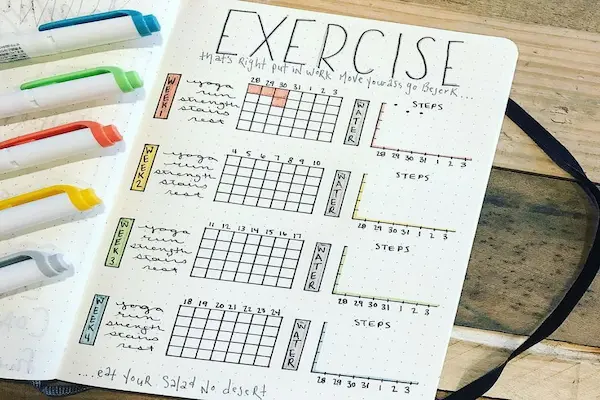
A weekly fitness habit tracker changes that experience completely, because instead of guessing how consistent you have been, you can look at a simple visual layout and immediately see which days you showed up, which habits you practiced, and where your routine might need a gentle adjustment.
When you like checklists, boxes to tick, and clean layouts, using a habit tracker turns your fitness journey into something concrete and visible, which makes it much easier to stay engaged, celebrate small wins, and notice real progress even while your goals are still in the early stages.
This guide will walk you step by step through how to build a weekly fitness habit tracker that works like a mini fitness journal, giving you space to plan your routine, track habits day by day, note simple metrics, and review your progress at the end of each week in a calm and organized way.
Everything here is designed for beginners who want clear structure without feeling overwhelmed, so you will find examples, layouts, and routine planner tips that you can copy, adapt, or redesign to match your own preferences and lifestyle.
Why a Weekly Fitness Habit Tracker Helps You Stay Consistent
Before building your layout, it helps to understand why tracking fitness habits weekly, rather than only daily or only monthly, works so well for beginners who want to see steady improvement without getting lost in too much information.
One week is long enough to show patterns and small trends, yet short enough that you can remember what happened and make adjustments quickly, which makes the weekly view perfect for progress tracking and gentle course corrections.
Instead of thinking in terms of perfect days, a weekly fitness habit tracker encourages you to think in terms of overall patterns, which reduces the guilt of one off missed workouts and reinforces the idea that consistency is built across several days, not measured by a single moment.
- Weekly tracking reveals patterns like always missing Mondays or always skipping the day after a late night, which helps you plan smarter.
- Seeing seven days at once gives a simple visual snapshot, so you can tell at a glance whether you moved your body most days or only once or twice.
- Checklists and boxes create satisfying mini rewards for your brain every time you mark a habit as done.
- Reviewing each week allows you to adjust the next week instead of waiting for a full month to notice what is not working.
- Short time frames support realistic goals, because you only need to think about the next seven days rather than your entire year at once.
With these benefits in mind, it becomes easier to understand that a weekly fitness habit tracker is not extra homework, but a simple tool that makes your effort more visible and therefore more rewarding.
Core Parts of an Effective Weekly Fitness Habit Tracker
Any layout can be personalized and decorated to match your style, yet most effective trackers share a few core elements that make them clear, usable, and helpful for routine planning and progress tracking.
Thinking in terms of sections helps you design a fitness journal page that feels balanced rather than crowded, so that every area has a job and you know exactly how to use it.
- Week overview area with space for the date range, a simple goal for the week, and maybe a short motivational phrase.
- Habit list column where you write the specific fitness related habits you want to track, such as steps, workouts, stretching, or hydration.
- Daily grid or checkboxes where each habit meets each day of the week, giving you a clear place to mark whether the habit was completed.
- Metrics box for simple numbers like minutes of movement, steps, or workout count, which turns your tracker into a light fitness journal.
- Reflection and notes area where you briefly describe how the week felt, what went well, and what you want to adjust next time.
- Routine planner area for next week where you can roughly schedule which days will be workout days, rest days, or lighter activity days.
Once these pieces are in place, your weekly fitness habit tracker becomes a visual dashboard for your week, rather than just a list of tasks, which makes it easier to spot wins and gaps without overthinking.
Step by Step: Designing Your Weekly Fitness Habit Tracker
Building your tracker becomes much easier when you follow a simple process instead of trying to design everything at once, so the next steps break the layout into manageable decisions that you can make in order.
Step 1: Decide the Format of Your Habit Tracker
Whether you prefer paper, digital tools, or a mix of both, choosing a format at the beginning helps you imagine how the weekly page will look and how you will interact with it every day.
- Notebook or journal pages can feel personal and creative, especially if you enjoy drawing lines, boxes, or adding color by hand.
- Printable sheets work well if you like the idea of having one clean page per week that you can pin on a wall or keep on your desk.
- Spreadsheets and simple digital tables suit people who prefer typing, easy edits, and automatic totals for things like minutes or steps.
- Note taking apps with checklist features make sense if your phone or tablet is always nearby and you like tapping boxes instead of writing.
Once the format is chosen, it becomes clear how large your boxes can be, how many habits will fit comfortably, and how much space you can dedicate to reflection notes and metrics.
Step 2: Define the Weekly Frame
Each tracker page should clearly show which week it belongs to, so that your fitness journal remains easy to navigate when you look back later and want to review your progress over time.
- Write the date range at the top, for example, Week of March 3 to March 9.
- Add a simple phrase that summarizes your focus for this week, such as Move three days or Stretch every evening.
- Leave one thin line or box where you can rate the week at the end with a simple scale, like one to five stars or a smiley face system.
Creating this frame turns each page into a self contained snapshot, which makes your weekly fitness habit tracker feel more like a collection of mini stories about your journey rather than random notes.
Step 3: List Your Priority Fitness Habits
Beginners often feel tempted to track everything at once, yet a cluttered habit tracker quickly becomes overwhelming, so choosing just a few priority habits will keep your layout clean and your mind focused.
- Start with three to five fitness related habits instead of ten or more, especially in your first weeks.
- Include at least one movement habit, such as walking, workouts, or stretching.
- Add one or two support habits like hydration, sleep hours, or daily step count if these matter to your goals.
- Consider one mindset habit, such as quick mood check, short breathing break, or journal line after workouts.
Keeping your list compact means you are more likely to fill in the tracker consistently, which matters more than tracking every possible detail.
Step 4: Build the Weekly Grid
The grid is where your weekly fitness habit tracker becomes visual, because it transforms abstract goals into a series of small boxes that you can fill in across seven days.
- Draw or create a column for your habit names on the left side of the page.
- Across the top, create columns for each day of the week, from Monday to Sunday or whichever sequence fits your schedule.
- Make sure each habit has a row that connects across all seven days, so every intersection can become a checkbox, dot, or color block.
- Choose a simple symbol, such as an X, a solid circle, or a filled square, that you will use consistently to mark completed habits.
By the end of the week, this grid will show a pattern of marks and blanks that makes your consistency easy to read, even from a quick glance.
Step 5: Add Metrics Boxes for Progress Tracking
Habit completion is important, yet some goals benefit from basic numbers, so including one or two metrics boxes turns your tracker into a lightweight fitness journal and routine planner combined.
- Create a small section for weekly totals, such as total minutes of exercise, total number of workouts, or total steps if you track them.
- Add a tiny daily metrics row underneath the main grid if you want to track something like sleep hours, energy level, or mood using numbers or symbols.
- Reserve one line for an overall weekly rating where you quickly rate energy, effort, or satisfaction with your routine.
These simple numbers help you see whether your habits are becoming more consistent, staying steady, or drifting downward, which supports realistic adjustments rather than emotional reactions.
Step 6: Reserve Space for Weekly Review Notes
Tracking without reflection misses a powerful opportunity, so a good weekly fitness habit tracker always includes a box or area dedicated to reviewing what happened and planning small changes.
- Label one box as Weekly reflections and leave enough room for at least three short bullet points.
- Create a second box called Next week plan where you can write two or three intentions, such as Move workouts earlier or Add one stretch session.
- Optionally add a small section titled Wins of the week where you list two or three things that went well, no matter how small.
These boxes turn your tracker into a gentle conversation with yourself, helping you stay encouraged while also learning from each week.
Example Layout for a Weekly Fitness Habit Tracker Page
Seeing a sample structure makes it easier to imagine your own page, so the following layout can be copied into a notebook, recreated as a printable, or translated into a digital format.
Section One: Weekly Header
- Line for Week of and the date range.
- Line for Weekly focus, such as Three walks and two strength days.
- Small area for Week rating with stars or a number out of ten.
Section Two: Habit List and Day Grid
- Left column titled Habits with space for five entries, for example:
- Walk 20 minutes
- Strength session
- Stretch 5 minutes
- Water goal
- Sleep 7 hours
- Top row with seven columns labeled Monday through Sunday.
- Grid squares or circles at each habit and day intersection for checkmarks or color fills.
Section Three: Metrics and Mini Fitness Journal
- Small table called Weekly numbers with lines for:
- Total workouts
- Total active minutes
- Average energy (one to five)
- Optional row under the main grid labeled Daily mood where you can mark a simple happy, neutral, or tired symbol for each day.
Section Four: Reflection and Routine Planner
- Box titled This week I noticed, with room for three or four bullet points describing patterns.
- Box titled Next week I will try, with space for two or three simple adjustments.
- Small box titled Wins and gratitude, for listing any positive moments related to your fitness habit tracker.
Using this structure gives your weekly fitness habit tracker a clear, visually organized layout that supports both tracking and planning without crowding the page.
What to Track: Useful Metrics for Beginners
Choosing the right metrics is essential, because tracking too many details quickly becomes confusing, while tracking too few can make it hard to see real change, so a balanced approach works best for beginners.
Basic Activity Metrics
- Number of workouts completed during the week.
- Total minutes of intentional movement, combining walks, workouts, and stretching.
- Daily step count if you use a step counter or device.
- Longest streak of consecutive days with at least one movement habit completed.
Recovery and Well Being Metrics
- Approximate sleep hours per night so you can see how rest affects your energy and exercise.
- Simple energy rating for each day, using a small scale like low, medium, high.
- Mood check marks that capture whether you felt calmer, more focused, or stressed.
- Muscle soreness notes, marked as none, mild, or strong when relevant.
Context and Notes Metrics
- Short notes about obstacles, such as overtime at work, travel, or illness, which help explain lighter weeks without judgment.
- Small comments on what felt easy or enjoyable, which can guide future routine planning.
- Quick reminders about which time of day you preferred for movement on good days.
Blending these metrics gives your weekly fitness habit tracker just enough detail to show real progress over time without turning it into a complicated spreadsheet.
How to Use Your Weekly Fitness Habit Tracker Day by Day
Designing a beautiful tracker only helps if you actually use it, so it is important to connect your page to simple daily actions that quickly become part of your routine.
Morning Check In
- Look at your weekly page for less than a minute while you drink water or start your morning beverage.
- Notice which habit or workout you planned for the day and mentally commit to a realistic time for it.
- Adjust the plan slightly if you already know the day will be unusually busy or tiring.
During the Day
- Keep the tracker visible on your desk, wall, or digital home screen so it stays in your awareness.
- Mark small wins in real time when possible, such as logging a short walk or quick stretch as soon as you finish.
- Use the tracker as a gentle prompt rather than a strict rulebook, and allow flexibility when needed.
Evening Review
- Spend a couple of minutes before bed or after dinner marking which habits you completed.
- Write a brief note or symbol capturing how the day felt in terms of energy or mood.
- Glance at the week so far to see if any pattern is beginning to appear, such as strong momentum building or a quieter stretch.
These small interactions reinforce your identity as someone who tracks and cares about their consistency, which can be just as powerful as the physical workouts themselves.
Weekly Review Ritual: Turning Data Into Motivation
At the end of the week, your tracker contains valuable information, and a simple review ritual helps you turn that information into encouragement and practical adjustments.
Step by Step Weekly Review
- Look at the checkmarks and patterns in your grid without judging yourself, simply noticing which habits were more consistent and which were less present.
- Read any short notes about energy, mood, or obstacles and ask yourself what those notes reveal about the week as a whole.
- Fill out your weekly numbers, such as total workouts and total active minutes, and compare them to the previous week if you have the data.
- List at least three wins, even if they feel small, such as completing one more workout than last week or stretching after a long workday.
- Write two or three specific changes for next week, such as reducing the number of habits, moving sessions to a different time, or adding one extra rest day.
Treat this review as a friendly conversation with yourself rather than a performance review, because the goal is to support long term consistency, not to score or criticize every detail.
Using Your Tracker as a Fitness Routine Planner
Although a weekly fitness habit tracker is primarily for progress tracking, it can also serve as a practical routine planner that helps you decide in advance which days will be active and which habits will be prioritized.
- Use a light symbol or outline in each day box before the week starts to indicate planned workout days.
- Write specific sessions, such as Walk 20 minutes or Strength 15 minutes, in smaller text under that day.
- Block days that you know are especially busy and mark them as lighter movement days or rest days.
- Keep the plan flexible, understanding that it is a guide rather than an unbreakable rule.
Planning in this way gives you a clear picture of your week before it begins, which makes it more likely that you will stick to your intentions because you have already made decisions ahead of time.
Visual Ideas to Make Your Weekly Fitness Habit Tracker Appealing
A visually oriented layout can make tracking feel more enjoyable and less like a chore, especially if you are someone who loves colors, symbols, or simple creative touches.
- Assign a color to each habit and use highlighters or colored pens to fill in completed boxes.
- Draw small icons for different types of activity, such as a shoe for walking or a little dumbbell for strength sessions.
- Use shading or patterns to represent partial completion, which helps you give yourself credit for effort even when things are not perfect.
- Create a small progress bar at the bottom of the page where you color segments for each workout completed during the week.
- Add simple stickers or marks in the Wins section when you reach a mini milestone, such as three weeks in a row of consistent tracking.
These visual elements keep your weekly fitness habit tracker inviting, which matters because the more you enjoy looking at it, the more often you will actually use it.
Common Mistakes With Habit Trackers and How to Avoid Them
Understanding typical mistakes prevents frustration and helps you build a habit tracking system that feels realistic and supportive instead of heavy or stressful.
- Tracking too many habits at once, which quickly leads to empty boxes and discouragement; focusing on a few key behaviors is usually more effective.
- Expecting perfection and feeling like the tracker has failed if you miss a day, instead of treating blank spaces as simple information.
- Only checking the tracker at the end of the week, which removes the daily reminder effect and makes it easier to forget planned habits.
- Ignoring how you feel and only looking at numbers, which can hide the fact that a routine might be too intense or not enjoyable enough.
- Never adjusting the layout, even when you realize that certain sections are not useful for you personally.
Avoiding these pitfalls keeps your weekly fitness habit tracker light, flexible, and aligned with your real life, rather than becoming another source of pressure.
Sample Weekly Fitness Habit Tracker for a Beginner
Seeing a concrete example helps bring all of these ideas together, so imagine a beginner who wants to walk more, stretch regularly, and feel calmer by the end of the workday.
Example Habit List
- Walk 20 minutes.
- Stretch 5 minutes.
- Strength 15 minutes.
- Drink 6 glasses of water.
- Sleep at least 7 hours.
Example Weekly Goals and Metrics
- Goal: Three walks, two strength sessions, stretching on four evenings.
- Weekly totals to track:
- Number of walks completed.
- Number of strength sessions completed.
- Total minutes of movement.
- Average daily energy rating.
Example Reflection Questions for the Review Box
- On which days did moving feel easiest, and what was different about those days.
- Which habit was most consistent and which one was the hardest to remember.
- What small change could make next week feel smoother, such as moving workouts earlier or shortening them slightly.
Using questions like these turns your weekly fitness habit tracker from a static chart into a tool that teaches you about your own patterns and preferences.
Staying Encouraged While You Track Your Progress
Progress tracking can sometimes feel confronting, especially when you see blank boxes or lower numbers than you hoped, so building encouragement into the process is just as important as drawing the grid itself.
- Focus on trends over several weeks rather than judging any single week in isolation.
- Celebrate consistency in showing up, even when sessions are shorter or lighter than planned.
- Use positive language in your notes, describing what you learned rather than what you failed to do.
- Remind yourself that every filled box is proof of effort, which is the foundation of long term change.
- Consider rewarding yourself in small, healthy ways after several weeks of consistent tracking, such as new stationery for your fitness journal or extra time for a relaxing activity.
When encouragement becomes part of your routine planner and tracking process, you will find it much easier to stay committed, even when life gets busy or progress feels slower than expected.