

Busy professionals often feel that staying active is a luxury reserved for people with flexible schedules, free evenings, or slow weekends.
When your calendar is full of meetings, deadlines, family responsibilities, and constant notifications, traditional fitness advice that assumes spare hours simply does not match your reality.
A busy lifestyle does not mean you have to give up on your health, but it does mean that your fitness habits need to be efficient, intentional, and deeply respectful of your limited time and energy.
Instead of chasing long sessions that constantly get postponed, you can design short exercises and quick workout blocks that fit into the small pockets of time you already have.
By treating movement like an essential part of your time management rather than an optional extra, you turn fitness into something that works with your schedule instead of competing against it.
The Reality of a Busy Lifestyle
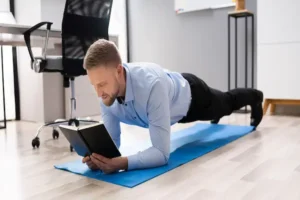
Many professionals start the day already thinking about everything that must be delivered, answered, or solved, and this mental load makes it easy to push exercise to the bottom of the list.
Emails arrive early, calls begin before you feel ready, and unexpected tasks appear throughout the day, making carefully planned long workouts seem unrealistic or even stressful.
After a long workday, energy is often low, willpower is depleted, and the idea of driving to a gym or following a long routine can feel more like another obligation than a form of self care.
Recognizing this reality is not an excuse; it is an honest starting point for building fitness habits for busy people that actually fit the way your life really works today.
Why Traditional Fitness Advice Often Fails Busy Professionals
Many common fitness recommendations assume that you can schedule multiple hour long sessions every week, follow detailed programs, and constantly track numbers, which can feel overwhelming when you barely have time to breathe between commitments.
Plans that require a completely new lifestyle, strict schedules, or complex routines demand more mental energy than a tired professional can consistently give.
When you try to follow those plans and inevitably miss a session, it is easy to fall into all or nothing thinking and conclude that you are simply not disciplined enough, which is rarely true.
The real issue is that the strategy does not respect the constraints of a busy lifestyle, whereas short exercises, compact routines, and flexible planning can adapt to your schedule instead of fighting it.
Core Principles of Fitness Habits for Busy People
Think in Minutes, Not Hours
One of the most powerful mindset shifts is to stop measuring workouts only in long blocks of time and start thinking in minutes that you can realistically protect during your day.
When you accept that five, ten, or fifteen minutes of focused movement can provide real benefits, you unlock many opportunities that previously looked too small to matter.
- Five minutes of short exercises between meetings can loosen tight muscles and refresh your focus.
- Ten minutes of a quick workout before a shower can raise your heart rate and build basic strength.
- Fifteen minutes of planned movement during lunch can become a powerful habit anchor in your schedule.
This minute based approach fits perfectly into a busy lifestyle because it allows you to protect small time blocks that would otherwise be lost to scrolling or low value distractions.
Focus on Short Exercises with High Impact
When time is limited, choosing movements that give the most benefit in the shortest period becomes a strategic advantage.
Full body movements, simple strength exercises, and brisk cardio bursts use multiple muscle groups at once and can be organized into quick workout combinations that respect your schedule.
- Squats, lunges, and hip hinges work large muscle groups in the legs and glutes in a very time efficient way.
- Pushups against a wall, counter, or floor recruit chest, shoulders, and arms with minimal setup.
- Planks and variations activate the core, supporting posture and stability during long hours of sitting.
- Brisk walking, marching in place, or stair climbs can elevate your heart rate without complex equipment.
By building your routine around these high impact short exercises, you ensure that every minute you invest generates meaningful returns for your body and mind.
Use Time Management, Not Willpower
Relying on motivation alone is risky because busy days rarely feel calm or convenient enough to make exercise appealing.
A more reliable strategy is to treat your quick workout blocks like important appointments that deserve space in your calendar, even if that space is small.
- Identify two or three natural windows in your day where a short exercise block could realistically fit, such as early morning, lunchtime, or immediately after work.
- Block those windows in your digital or paper calendar with clear labels, just as you would for a meeting or call.
- Decide ahead of time what you will do during each block, so you are not wasting minutes trying to choose when the time arrives.
- Protect those blocks as much as possible, and when you truly must skip one, reschedule a shorter version instead of canceling entirely.
Managing your fitness habits through time management instead of depending on willpower gives you structure and clarity in the middle of a busy lifestyle.
Quick Workout Building Blocks You Can Plug Into Any Day
Five Minute Office or Home Routines
On days when your schedule is extremely tight, a five minute routine can still make you feel more awake, more strong, and less stuck in your chair.
These micro sessions are designed to require no equipment, minimal space, and almost no preparation, making them perfect for busy people who need maximum convenience.
- Five Minute Bodyweight Wake Up
- One minute of marching in place or brisk walking around the room.
- One minute of bodyweight squats or chair sit to stands at a comfortable pace.
- One minute of wall pushups or counter pushups with steady breathing.
- One minute of alternating reverse lunges or step back taps if lunges feel too intense.
- One minute of gentle stretching for shoulders, chest, and hips.
- Five Minute Desk Reset
- Thirty seconds of shoulder rolls and neck stretches performed slowly.
- Ninety seconds of standing calf raises while holding the desk for balance.
- Ninety seconds of alternating side lunges or wide stance squats.
- Sixty seconds of seated core bracing where you sit tall and tighten your midsection.
- Thirty seconds of deep breathing with relaxed shoulders.
These short exercises can be repeated two or three times per day, giving you a quick workout effect without demanding more than a few minutes at once.
Ten Minute Total Body Quick Workout Examples
When you can secure ten minutes, it becomes possible to organize a total body quick workout that covers strength, mobility, and light cardio without feeling rushed.
A structured ten minute session offers a satisfying sense of completion while remaining realistic for a busy lifestyle.
- Ten Minute Strength and Pulse Routine
- Two minutes of brisk walking, marching, or stair climbing as a warm up.
- Two minutes of squats or chair sit to stands performed steadily.
- Two minutes of pushups against a wall or counter with controlled movements.
- Two minutes of hip hinges or good mornings to wake up the back of your legs.
- Two minutes of plank holds or elevated planks with rest as needed.
- Ten Minute Cardio and Core Blend
- Two minutes of light jogging in place or brisk marching.
- Two minutes of alternating step taps or side steps at a moderate pace.
- Two minutes of standing knee lifts while engaging your core.
- Two minutes of basic crunch variations or standing crunch movements.
- Two minutes of gentle stretching focused on hips and lower back.
A quick workout designed this way gives you a complete feeling without requiring major schedule changes or complex planning.
Movement Snacks Across the Day
Movement snacks are tiny bursts of activity sprinkled throughout your day, and they are especially powerful for people who sit a lot and have unpredictable schedules.
Instead of waiting for a perfect long session, you accumulate fitness benefits through many small actions that respect the realities of a busy lifestyle.
- Perform ten squats or calf raises every time you finish a call.
- Walk one or two flights of stairs every time you use the restroom, when possible.
- Do a thirty second wall sit while waiting for coffee or tea to brew.
- March in place during voice messages or audio briefings that do not require typing.
- Stretch your chest and shoulders every time you send or schedule a calendar invite.
These movement snacks can be combined with your more structured short exercises to create a powerful active pattern across your day.
Time Blocking Ideas That Actually Work in a Busy Lifestyle
The Ten Ten Ten Movement Model
A simple structure that works well for many busy people is the ten ten ten model, which spreads activity into three short sessions that are easier to protect than one long workout.
This model can be adjusted based on your level, but the core idea remains to create three small movement anchors in your day.
- Ten minutes in the morning for a wake up routine that activates your body.
- Ten minutes around midday for a quick workout that breaks up sitting and boosts energy.
- Ten minutes in the evening for mobility and stretching to release tension and support sleep.
Even if one of these blocks occasionally shrinks to five minutes, the structure helps you maintain fitness habits for busy people in a way that feels organized and practical.
Using Calendar Blocks Like Meetings
Treating your exercise blocks as non negotiable meetings with yourself can change how seriously you defend that time.
When these blocks are visible on your calendar, other tasks are less likely to consume the space silently.
- Create repeating calendar appointments labeled clearly, such as Morning Quick Workout or Lunch Movement Break.
- Schedule reminders ten minutes before each block so you can wrap up current tasks and switch smoothly.
- Inform colleagues or family when necessary that you are unavailable during those small windows, just as you would for any other meeting.
- Adjust the exact timing each week according to your real commitments instead of forcing the same rigid schedule forever.
By integrating fitness into your calendar, you use time management tools that you already rely on to support your health goals.
Backup Plans for Chaotic Days
Some days will be messy, unpredictable, and overloaded, and expecting a perfect plan to survive those days sets you up for frustration.
A better strategy is to create clear backup plans that define your minimum effort when your schedule collapses.
- Decide on a three minute emergency movement routine you can do anywhere, such as marching, squats, and wall pushups.
- Set a rule that on the busiest days, you will at least complete this emergency routine once before bedtime.
- Keep expectations intentionally low for those days and view any additional movement as a bonus, not a requirement.
- Review chaotic days without judgment and ask what minor adjustments could make the next similar day slightly more manageable.
This flexible approach keeps your fitness habits alive during stressful periods and protects you from the all or nothing mindset.
Habit Examples That Make Staying Active Automatic
Morning Habit Stacks for Busy People
Morning time often feels rushed, yet it is also one of the few parts of the day you can somewhat control before outside demands increase.
Using habit stacking, you can attach short exercises to existing morning actions so that movement happens almost on autopilot.
- After your alarm rings, sit up, place your feet on the floor, and do ten slow deep breaths before standing.
- Once you brush your teeth, perform one minute of gentle stretching for your neck, shoulders, and upper back.
- When coffee or tea is brewing, complete a two minute mini routine with squats and wall pushups.
- After you check your first messages, walk around your home or building for five minutes before sitting down to work.
These stacked habits transform ordinary morning tasks into anchors that support fitness habits for busy people without adding long new rituals.
Workday Habit Stacks That Fit a Busy Lifestyle
The workday is filled with natural transitions, and each transition is a chance to add a light movement action without extending your total work hours.
By linking small exercises to predictable events, your quick workout moments stop relying on memory alone.
- After every video call, stand up, stretch your chest, and perform ten calf raises.
- Once you send a major email or submit a report, walk for two minutes down the hallway or around your space.
- When you refill your water bottle, do a short set of squats or step ups if there is a safe step available.
- After you return from lunch, take three minutes for a desk reset routine before reopening your inbox.
These small habit stacks can significantly reduce the total time you remain seated while keeping your focus on work.
Evening Habit Stacks for Recovery and Relaxation
Evenings can easily disappear into screens and passive recovery, yet a small amount of intentional movement can improve how you sleep and how you feel the next morning.
Instead of seeing evening movement as intense training, you can treat it as a gentle reset for your body and mind.
- After you close your laptop for the day, take a short walk, even if it is just around your building or home.
- Once dinner dishes are done, spend five minutes stretching your hips, hamstrings, and lower back.
- When you turn off the television, perform a brief breathing exercise combined with light stretching before going to bed.
- After you set your alarm for the next day, mentally review one fitness habit you completed and one you want to repeat.
These evening stacks reinforce the message that movement is part of winding down, not only part of gearing up.
Realistic Planning Templates for Busy Professionals
Three Day Quick Workout Template
For professionals with very tight schedules, a three day structure can provide a realistic baseline that still supports meaningful progress.
This template combines short exercises, time blocking, and flexible routines that do not overwhelm your calendar.
- Day One: Strength Focus with Short Exercises
- Morning: Five minute wake up routine with squats, wall pushups, and gentle stretching.
- Midday: Ten minute strength quick workout focusing on legs and core.
- Evening: Five minute mobility and stretching session before bed.
- Day Two: Light Cardio and Movement Snacks
- Morning: Ten minute brisk walk or marching in place.
- Workday: Several movement snacks such as stair climbs, short walks, and posture breaks.
- Evening: Five minute easy stretching focusing on stiff areas.
- Day Three: Mixed Quick Workout Day
- Morning: Five to ten minute combined routine with strength and light cardio.
- Midday: Short desk reset with stretches and core activation.
- Evening: Relaxing walk or gentle mobility flow.
These three days can be repeated weekly, with the other days focused on movement snacks and low pressure activity.
Four Day and Five Day Templates for Extra Structure
Some busy people prefer a little more structure once basic habits are established, and in that case, four day or five day plans can be helpful.
These templates still rely on quick workout blocks and short exercises rather than long sessions that do not fit a busy lifestyle.
- Four Day Template
- Day One: Lower body strength and light cardio in two ten minute blocks.
- Day Two: Upper body and core with short exercises split between morning and evening.
- Day Three: Low impact cardio such as walking, cycling, or stair work for fifteen to twenty minutes total.
- Day Four: Full body mobility and mixed quick workout with moderate intensity.
- Five Day Template
- Day One: Short strength routine focused on legs and glutes.
- Day Two: Quick workout for chest, back, and arms using push and pull style movements.
- Day Three: Active recovery day with stretching, walking, and movement snacks.
- Day Four: Higher intensity short exercises such as brisk intervals within a safe range for your level.
- Day Five: Core stability and posture work combined with light mobility drills.
These templates are meant to guide planning, not to become rigid rules, so you can always swap days, shorten blocks, or lighten intensity when life demands flexibility.
Weekly Review Checklist for Busy People
A simple weekly review helps you adjust your plan in a realistic way and avoid repeating the same scheduling mistakes.
Instead of judging yourself, you can use this review to learn how your busy lifestyle interacts with your fitness habits.
- Did you complete at least your minimum quick workout blocks on most days.
- Which time blocks worked best and felt easiest to protect.
- Which blocks were constantly under pressure from meetings, calls, or family duties.
- What one small change could make next week smoother, such as shifting a session earlier or shortening a block.
- Which fitness habit for busy people felt most natural and which felt forced or unrealistic.
This gentle review process supports continuous improvement rather than perfection.
Staying Consistent When Life Gets Even Busier
The Minimum Baseline Rule
To protect your fitness habits during demanding seasons, it helps to define a minimum baseline that you commit to even when everything feels chaotic.
This baseline represents the smallest realistic amount of movement that still keeps the habit alive.
- Choose a three to five minute routine that you can perform almost every day regardless of travel, stress, or fatigue.
- Promise yourself that on the hardest days you will at least complete this baseline routine one time.
- Allow any extra movement or longer sessions to count as a bonus instead of a new expectation.
By holding onto this minimum, you avoid the discouraging feeling of starting from zero after every busy season.
Avoiding All or Nothing Thinking
All or nothing thinking says that if you cannot do the perfect planned workout, there is no point in doing anything, and this mindset is especially damaging for busy professionals.
Real progress comes from many imperfect actions accumulated over time, not from rare perfect days.
- Remind yourself that five minutes of movement always beats zero minutes, especially when repeated often.
- Notice when you feel tempted to skip everything because of one disruption and intentionally choose a shorter version instead.
- Record even the smallest wins so your brain learns to value partial progress.
Letting go of perfection frees you to act within the time you have rather than waiting for a time you wish you had.
Turning Fitness Habits for Busy People into a Sustainable Lifestyle
Fitting exercise into a tight schedule becomes much easier when you stop treating fitness as a temporary project and start viewing it as part of how you manage your busy lifestyle.
Short exercises, quick workout blocks, and movement snacks all prove that you do not need large chunks of time to support your health in a meaningful way.
Time management, habit stacking, and realistic planning templates give structure to your efforts so that you are not relying only on willpower or motivation that appears and disappears.
As you test these strategies, some habits will feel natural and some will not, and this feedback allows you to refine your personal system instead of copying someone else’s routine.
Over weeks and months, these fitness habits for busy people can help you feel stronger, more focused, and more in control of your energy, even while your schedule remains demanding.
Every short walk, every tiny routine, and every quick workout is a statement that your health matters right now, not only at some imagined future moment when life finally slows down.